
KINGSAT
KINGSAT

  • Where To Buy
  • About KINGSAT
    • Our Story
    • Field Application
    • Events
    • News
  • Solutions
    • Connectivity
      • VSAT
      • Microwave
      • 4G-LTE
    • Satellite TV
    • IoT Video Applications
      • VBOX
  • Video
    • Maritime VSAT
    • Maritime TVRO
    • Microwave Tracking
    • Maritime 4G-LTE
    • Video Compression
    • Maintainence
  • Contact Us
EN
  • 中文
  • English
  • Home
  • Maritime VSAT
  • Maritime TVRO
  • Maritime 4G-LTE
  • Microwave Tracking
  • Video Compression
  • VBOX maritime CCTV Tracker
  • icon-Youtube
  • icon-LinkedIn
logo
  • Where To Buy
  • About KINGSAT
    • Our Story
    • Field Application
    • Events
    • News
  • Solutions
    • Connectivity
    • Satellite TV
    • IoT Video Applications
  • Video
    • Maritime VSAT
    • Maritime TVRO
    • Microwave Tracking
    • Maritime 4G-LTE
    • Video Compression
    • Maintainence
  • Contact Us
  • Email
    • English

Maritime Applications

  • Home
  • Solutions
  • Connectivity
  • Microwave
  • Maritime Applications
  • Connectivity
    • VSAT
    • Microwave
      • Maritime Applications
      • Emergency Communications
      • Low-Altitude Networks
      • Energy Applications
      • Inspection and Survey
    • 4G-LTE
  • Satellite TV
  • IoT Video Applications
    • VBOX
    • Video Encoder
  • image

    When Disaster Strikes and Networks Go Down, an Airborne Base Station Can Restore Connectivity

    2026-11-06

    When earthquakes, floods, or typhoons strike, damaged cellular towers, severed fiber-optic cables, and power outages can leave disaster-affected areas cut off from communications almost instantly. During the critical early hours of rescue operations, a communications blackout can disrupt command and coordination, delay the delivery of essential supplies, and prevent live high-definition video and imagery from reaching response teams.

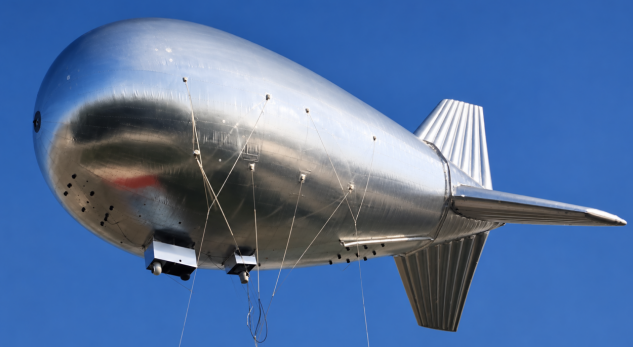
    One way to restore coverage when ground networks are severely damaged is to deploy an emergency communications system carried by a tethered aerostat. Equipped with a compact 4G/5G base station and high-definition monitoring equipment, the aerostat rises several hundred meters above the ground, effectively creating an airborne cell site that can provide wireless access to rescue personnel and affected communities across several square kilometers below.

    Getting the base station into the air, however, is only half the challenge. User traffic from the airborne 4G/5G cell site, aerial imagery from drones, and voice communications for rescue operations must all be carried in real time to a backbone network tens of kilometers away. Establishing this high-capacity, low-latency, interference-resistant wireless backhaul link is where the KINGSAT suspended-mount, auto-tracking microwave antenna system plays a critical role.

    .
    Know More
  • 20261104a

    High Bandwidth, No Monthly Subscription Fees: A Microwave Networking Solution for Offshore Oil and Gas Platforms

    2026-11-04

    In deepwater oil and gas fields, offshore facilities commonly operate as interconnected groups comprising central processing platforms (CPPs), unmanned wellhead platforms (WHPs), floating production, storage and offloading units (FPSOs), drilling rigs, and standby vessels.

    As oilfield operations become increasingly digital, these facilities must exchange large volumes of data in real time, including feeds from explosion-proof surveillance cameras, supervisory control and data acquisition (SCADA) systems, wellhead temperature and pressure sensors, and emergency communications systems.

    How can these “steel islands,” spread across tens of kilometers of open water, be connected efficiently? Many operators rely on commercial VSAT services, but recurring connectivity charges and limited bandwidth can be significant constraints. Subsea fiber-optic cables can cost tens of millions to install, are vulnerable to damage, and are not a practical hardwired solution for floating facilities that move and rotate.

    KINGSAT, a specialist manufacturer of maritime auto-tracking antennas, offers a private microwave networking solution designed for offshore oil and gas installations. Combining high bandwidth, low latency, and no recurring satellite bandwidth subscription fees for on-network traffic, it provides an alternative communications backbone for offshore energy operations.

    Know More
  • 2026-07-10_155346

    Custom Microwave Antennas from 1.4 GHz to E-Band: How KINGSAT Adapts to Diverse Applications

    2026-10-29

    As wireless communications, 5G non-terrestrial networks (5G-NTN), low-altitude applications, and digitalization in the maritime sector continue to advance, wireless links must operate in increasingly complex environments. Requirements range from the penetration and beyond-line-of-sight capabilities associated with lower-frequency 1.4 GHz links, to 5.8 GHz industrial wireless bridges and gigabit-capacity microwave backhaul at 18 GHz, 23 GHz, and even E-Band (80 GHz millimeter wave). Each application places different demands on operating frequency, RF interfaces, and tracking performance under motion.
    Conventional microwave antennas with fixed operating bands or limited form factors can struggle to accommodate non-standard frequencies and a wide range of installation platforms. The result can be fragmented hardware designs and costly additional development work.
    As a specialist manufacturer of automatic-tracking antennas for maritime and land-based applications, KINGSAT combines established dynamic-tracking algorithms with an open, modular architecture. Its customizable microwave antenna portfolio spans 1.4 GHz to E-Band (80 GHz) and can be adapted to a wide range of platforms—bringing greater flexibility to demanding wireless deployments.

    Know More
  • image

    Stop Tower-Climbing Alignment Costs from Eroding Your Profits: How Auto-Aligning Pole-Mounted Microwave Antennas Minimize Manual Maintenance

    2026-10-26

    In point-to-point (P2P) and point-to-multipoint (PtMP) microwave networks, high-gain parabolic antennas are essential for long-distance, high-capacity wireless transmission. Yet private network operators, power and oil-and-gas companies, emergency communications providers, and smart mining integrators all face the same operational challenge: costly return visits to towers for antenna realignment are steadily eroding project margins.

    Why do conventional fixed parabolic antennas need repeated manual realignment? And how can a different antenna architecture eliminate the need to climb towers simply to correct antenna misalignment?

    Drawing on its expertise in maritime and land-based auto-tracking antennas, KINGSAT has adapted high-precision maritime tracking algorithms and rugged hardware for terrestrial installations. The result is the MP Series of pole-mounted auto-tracking microwave antennas, designed to change how fixed microwave links are maintained.

    Know More
  • 052bfed3f2a35b97adb870a07215afa4

    Disaster-Damaged Fiber Networks: How Emergency Communication Vehicles Establish a 2.5 Gbps Backhaul Link in Under 3 Minutes

    2026-10-21

    When typhoons, earthquakes, floods, or landslides strike, collapsed cellular base stations, damaged fiber-optic trunk lines, and power grid failures can leave affected areas cut off from communication networks within minutes. During the critical early stages of a rescue operation, a loss of connectivity between frontline teams and the central command center can prevent live HD video from reaching decision-makers and disrupt the coordination of personnel and supplies, increasing both operational risks and response challenges.
    Emergency communication vehicles serve as mobile communications hubs for frontline response teams. Their ability to establish a high-capacity, fiber-like wireless backhaul link within minutes of arriving on site can make a critical difference to response times and operational decision-making.

    Know More
  • fc620797d6eda25e9cf1fb94387abea2

    Subsea Cables Are Hard to Deploy, Satellite Bandwidth Is Expensive: How Can 5G-NTN Microwave Backhaul Help?

    2026-10-19

    As the maritime economy expands and demand grows for smart-island infrastructure and nearshore network coverage, islands and offshore facilities, including marine aquaculture sites, oil and gas platforms, and tourist islands, increasingly need fast, reliable mobile connectivity. Yet backhaul remains one of the biggest obstacles to deploying island base stations. Remote locations and harsh sea conditions make conventional terrestrial cabling impractical, leaving some base stations with local coverage but no viable connection to the wider network. The industry therefore needs wireless backhaul solutions that combine high bandwidth, cost efficiency, and flexible deployment.

    Know More
  • 418f31a91ddce60100df59d8fe4b8223

    How Can Reliable 100 km Offshore Transmission Be Achieved? Why Conventional Wireless Bridges Lose Packets in Rough Seas

    2026-10-14

    Long-range, high-bandwidth, low-latency communication between offshore facilities and shore is essential for offshore oil and gas platforms, marine ranches, and unmanned vessels. Yet tens or even hundreds of kilometers offshore, vessel motion caused by wind and waves can cause conventional fixed microwave antennas to lose alignment with the target, resulting in signal attenuation, packet loss, or link interruptions. KINGSAT microwave auto-tracking antennas automatically adjust their pointing direction as a vessel moves, helping maintain stable long-distance wireless links and supporting reliable offshore-to-shore data transmission over distances of around 100 km.

    Know More
  • ScreenShot_2026-10-09_154104_219

    Cost-Effective Emergency Communications: Rapid Base Station Deployment in Remote and Disaster-Affected Areas

    2026-10-09

    In disaster response and remote field operations, restoring communications quickly, reliably, and affordably is essential for on-site coordination and rescue efforts. However, conventional communication solutions often require lengthy network deployment, involve high satellite data costs, or rely on time-consuming manual antenna alignment.

    Using its automatic microwave tracking technology, KINGSAT offers a cost-effective wireless backhaul solution for temporary base stations in remote mountainous and disaster-affected areas. The solution enables rapid deployment of high-bandwidth, low-latency communication links with fiber-like performance in minutes, even in challenging environments.

    Know More
  • wx_20260816212157_21_37

    BVLOS Drone Inspections Keep Losing Video? How a 1.5 kg Lightweight Tracking Antenna Keeps Video Links Stable

    2026-09-30

    In low-altitude and industrial inspection applications such as power-line patrols, oil and gas pipeline inspections, forest fire prevention and response, and post-disaster emergency rescue, beyond visual line of sight (BVLOS) drone inspections have become essential for improving operational efficiency. Yet field engineers and video link maintenance teams often face a difficult problem: once inspection distances extend to tens of kilometers, 1080p HD video feeds frequently freeze, experience packet loss, or even drop out completely, severely limiting the inspection radius and emergency command and response.

    Know More
  • Where To Buy
  • About KINGSAT
  • Solutions
  • Video
  • Contact Us
logo
  • Address:

    Block A.2 Jisheng Road.,Nansha District Guangzhou,PRC.,511455

  • Phone:

    +86 20-28662868-108
  • WhatsApp:

    100000000
  • Email:

    sales@kingsat-tech.com john.huang@kingsat-tech.com

Product

  • Maritime VSAT
  • Maritime TVRO
  • Maritime 4G-LTE
  • Microwave Tracking
  • Video Compression
  • VBOX maritime CCTV Tracker

Get in touch

  • icon-Youtube
  • icon-LinkedIn

Welcome your Inquiry

Inquiry Information

  • WhatsApp: 100000000
  • +86 20-28662868-108
  • +86 20-28662869
  • sales@kingsat-tech.com