
When earthquakes, floods, or typhoons strike, damaged cellular towers, severed fiber-optic cables, and power outages can leave disaster-affected areas cut off from communications almost instantly. During the critical early hours of rescue operations, a communications blackout can disrupt command and coordination, delay the delivery of essential supplies, and prevent live high-definition video and imagery from reaching response teams.
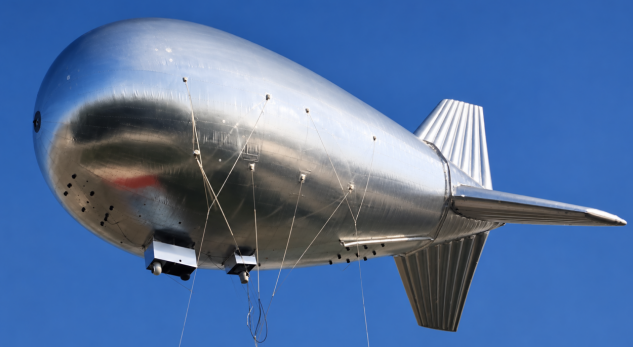
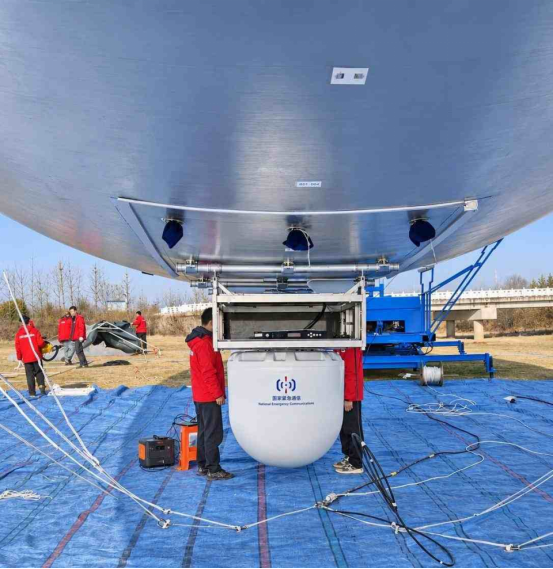
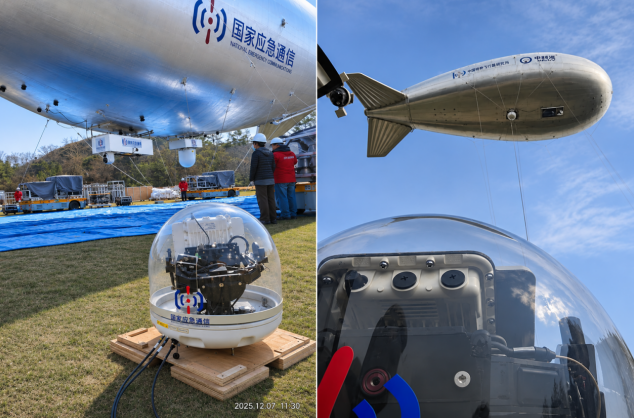
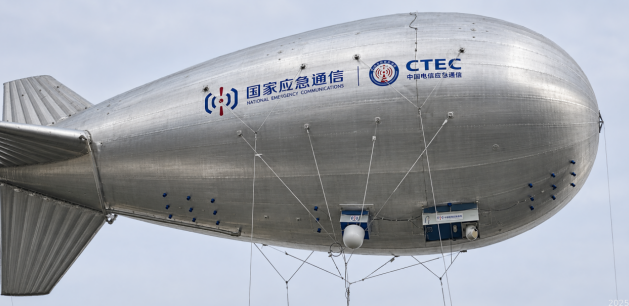
One way to restore coverage when ground networks are severely damaged is to deploy an emergency communications system carried by a tethered aerostat. Equipped with a compact 4G/5G base station and high-definition monitoring equipment, the aerostat rises several hundred meters above the ground, effectively creating an airborne cell site that can provide wireless access to rescue personnel and affected communities across several square kilometers below.
Getting the base station into the air, however, is only half the challenge. User traffic from the airborne 4G/5G cell site, aerial imagery from drones, and voice communications for rescue operations must all be carried in real time to a backbone network tens of kilometers away. Establishing this high-capacity, low-latency, interference-resistant wireless backhaul link is where the KINGSAT suspended-mount, auto-tracking microwave antenna system plays a critical role.
Challenges: Wind Disturbance, Platform Motion, and Narrow-Beam Alignment
Building a stable, high-capacity microwave backhaul link from a tethered aerostat hundreds of meters above the ground presents several demanding engineering challenges.
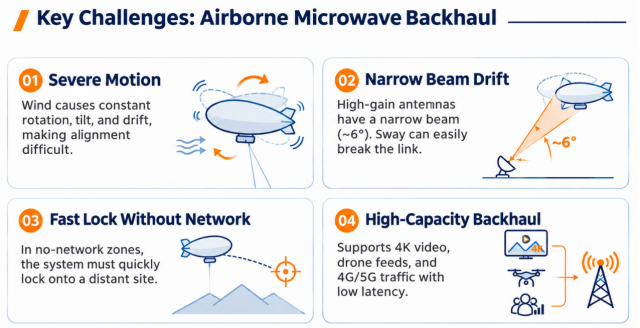
Constant Motion in High-Altitude Winds
A tethered aerostat is exposed to wind shear, turbulence, and tension from its tether, causing continuous, unpredictable yaw, tilt, and lateral movement. A conventional fixed directional antenna can quickly lose alignment, while an omnidirectional antenna typically lacks the gain needed for backhaul links spanning tens of kilometers.
Keeping a Narrow Microwave Beam on Target
A high-gain parabolic antenna rated at 30 dBi may have a beamwidth of only about 6°. As the aerostat moves in the wind, the beam can drift away from the remote endpoint. Without precise motion compensation and continuous tracking, the microwave link is vulnerable to repeated interruptions.
Rapid Acquisition Without a Working Public Network
When public cellular networks are unavailable in a disaster zone, the antenna cannot rely on normal network-assisted positioning or connectivity. It must still find and align with a distant backbone site, potentially tens of kilometers away, so the emergency link can be established quickly after deployment.
High-Throughput Backhaul for Video and User Traffic
Emergency operations may need to carry multiple 4K video feeds, drone imagery, and traffic generated by large numbers of 4G/5G users. Conventional satellite services can involve bandwidth costs and latency constraints, making high-capacity terrestrial-style backhaul an important option for applications requiring hundreds of megabits per second or more.
Solution: KINGSAT M6S Suspended-Mount, Three-Axis Auto-Tracking Microwave System
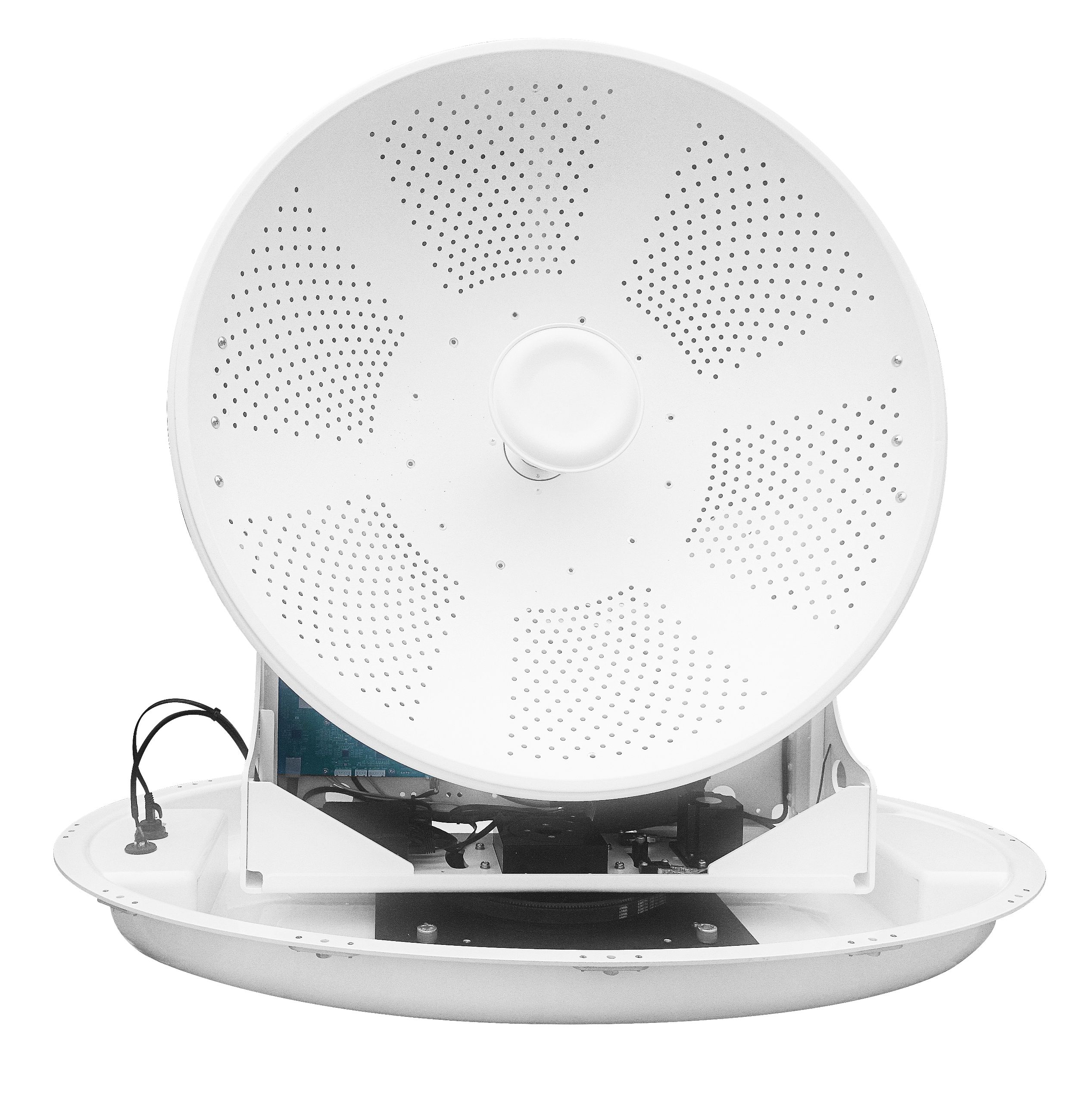
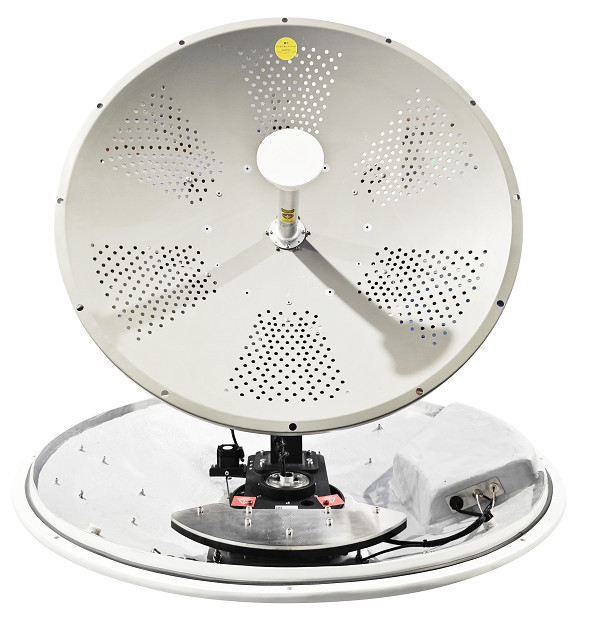
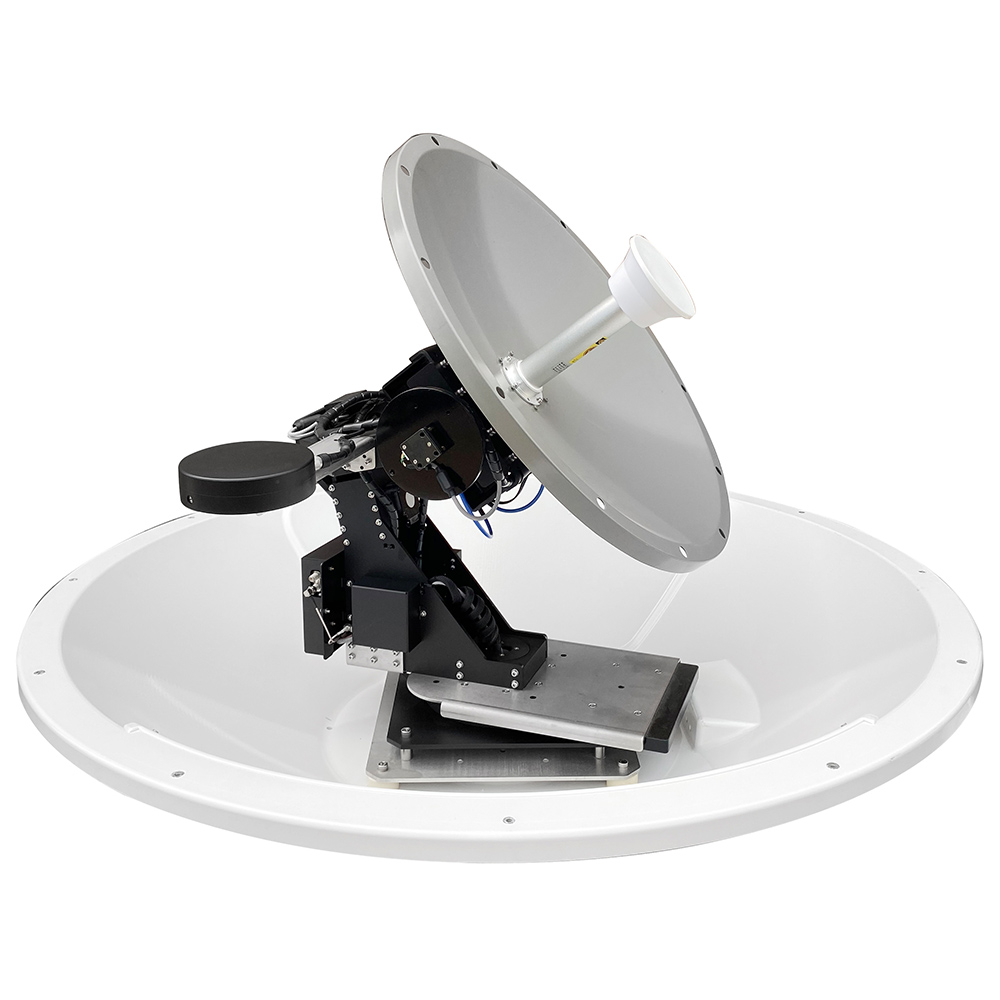
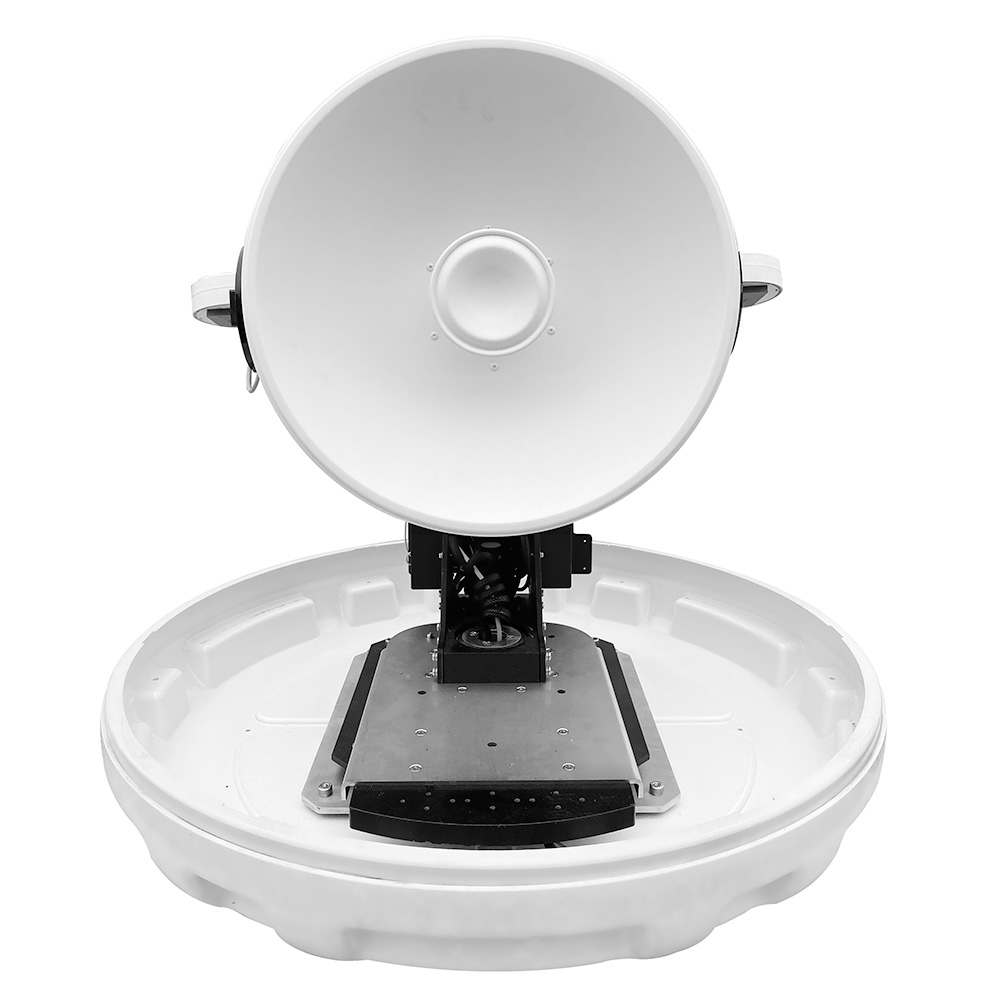
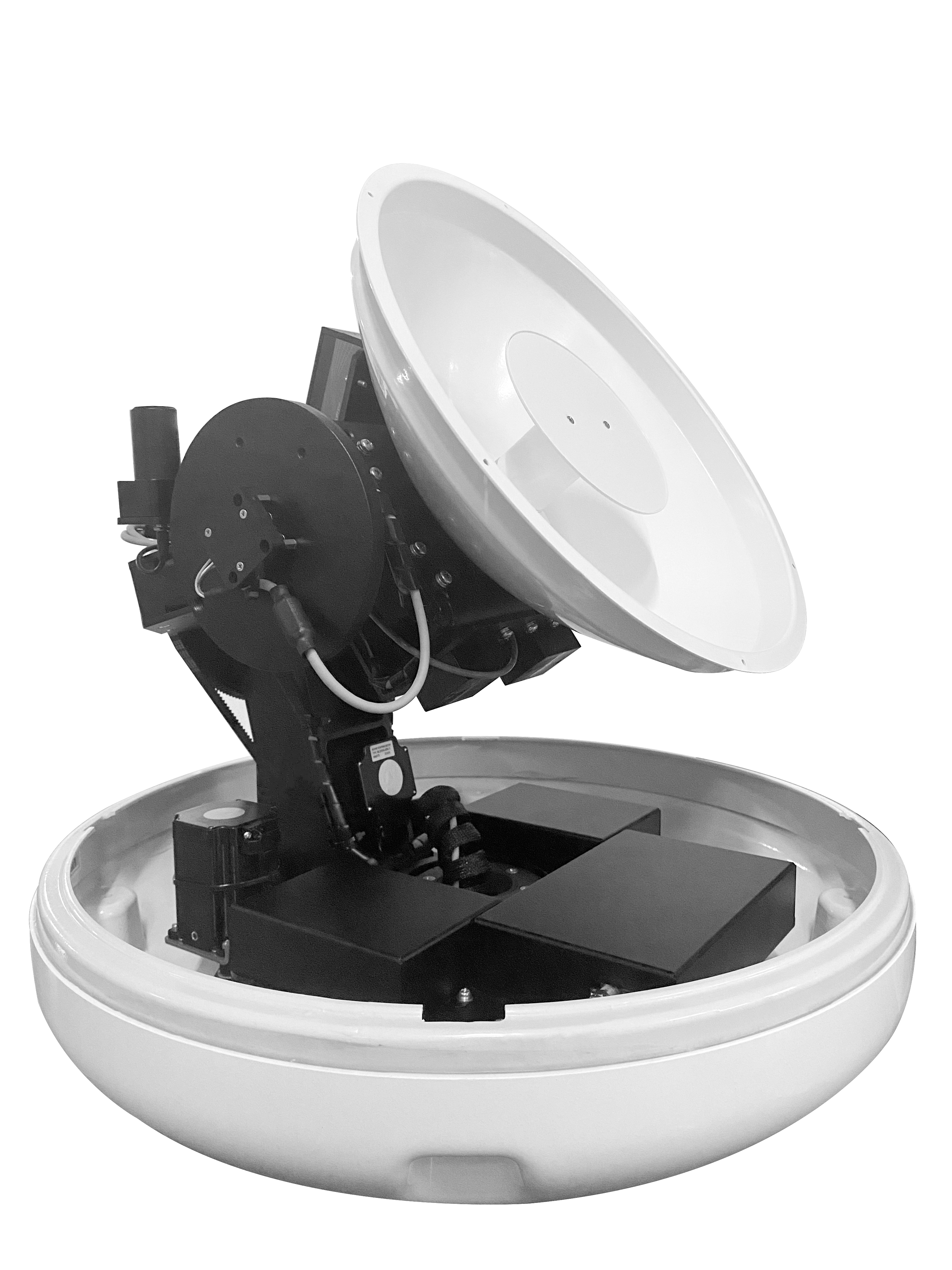
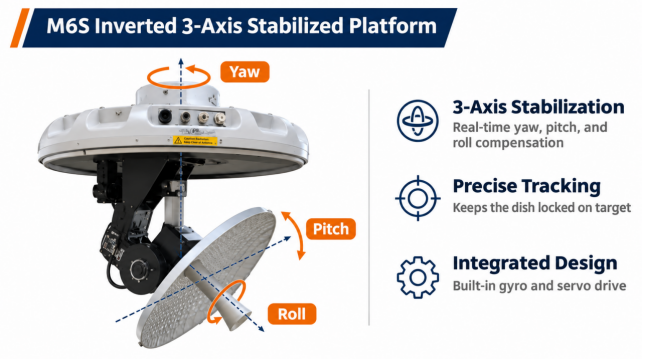
Designed for the operating conditions of tethered airborne platforms, the KINGSAT M6S combines an suspended mounting configuration with three-axis stabilization and automatic microwave tracking to support reliable, high-capacity backhaul from the aerostat to a remote ground site.
Suspended-Mount, Three-Axis Stabilized Platform
The M6S is configured for installation beneath the aerostat. Its integrated precision three-axis gyroscope and servo drive system respond to yaw, pitch, and roll, applying real-time compensation to keep the parabolic antenna directed toward the remote backbone site as the airborne platform moves.
Integrated High-Speed Microwave Modem
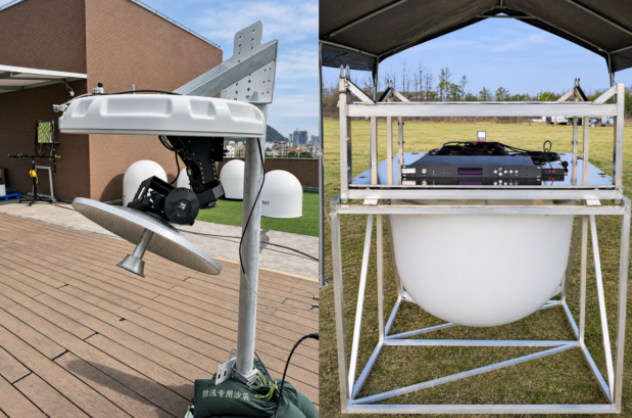
A high-speed point-to-point microwave modem is integrated within the M6S radome. This reduces the need for separate equipment inside the aerostat payload enclosure, helping conserve space and reduce the airborne payload.
Cloud-Based Telemetry and Remote Management
Antenna orientation, signal strength, and link status can be monitored through the cloud platform at www.microwave-track.com. Ground-based operators can remotely review system performance and adjust parameters, supporting ongoing link management throughout deployment.
Benefits: Fast Deployment, High-Capacity Backhaul, and Wind-Resilient Tracking
The KINGSAT suspended-mount auto-tracking system is designed to strengthen the backhaul connection supporting emergency 4G/5G base stations deployed on tethered aerostats.
High Bandwidth with Millisecond-Level Latency
With stated backhaul throughput ranging from 600 to 1,500 Mbps, depending on system configuration and operating conditions, and latency at the millisecond level, the solution is intended to support multiple 4K video streams, real-time command communications, and the traffic demands of emergency 5G cells.
Long-Range Links Beyond 50 km
Combining a 30 dBi high-gain parabolic antenna with a sensitive tracking system, the solution is designed for high-speed point-to-point backhaul over distances of 50 km or more under suitable deployment conditions. Elevated platforms can also help maintain connectivity across difficult terrain and waterways when a viable radio path is available.
Automatic Link Acquisition Without Manual Pointing
Using VHF-assisted coordinate exchange, the system can calculate the required pointing angles and acquire the remote endpoint automatically, even when the local public network is unavailable. This reduces the need for manual alignment and helps accelerate emergency deployment.
Compact Integration for Lower Payload Weight
Integrating the antenna and modem into a single assembly can reduce the space, weight, and external hardware required on the aerostat. This supports more efficient payload integration and can help improve deployment endurance, subject to the overall platform design.
Conclusion: Reliable Backhaul for Airborne Emergency Communications
When disaster damages ground communications infrastructure, a tethered aerostat can bring 4G/5G coverage back to affected areas. The KINGSAT M6S suspended-mount, auto-tracking microwave system provides the critical connection between that airborne base station and a remote backbone site. By compensating for platform movement and maintaining precise microwave alignment, it helps carry emergency communications and field data back to response teams.
As a specialist in auto-tracking antenna solutions, KINGSAT continues to develop wireless communications technologies for airborne emergency platforms, drones, and other mobile applications, with a focus on reliable connectivity and practical deployment.
Contact us: sales@kingsat-tech.com Official website: www.kingsat-tech.com
Youtube: http://www.youtube.com/@kingsatmaritimeantennas4640