
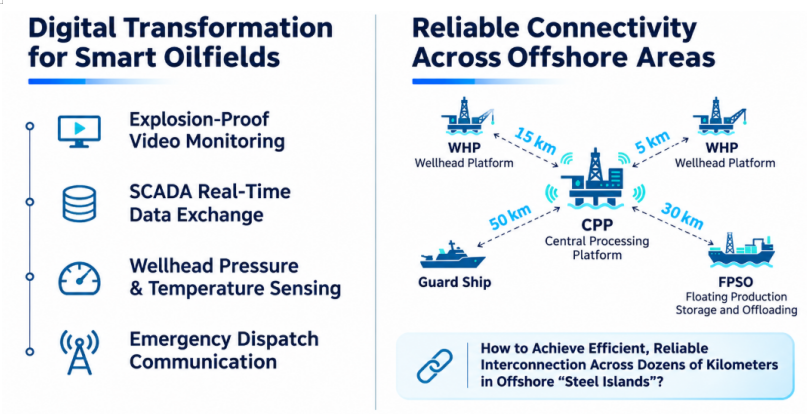
In deepwater oil and gas fields, offshore facilities commonly operate as interconnected groups comprising central processing platforms (CPPs), unmanned wellhead platforms (WHPs), floating production, storage and offloading units (FPSOs), drilling rigs, and standby vessels.
As oilfield operations become increasingly digital, these facilities must exchange large volumes of data in real time, including feeds from explosion-proof surveillance cameras, supervisory control and data acquisition (SCADA) systems, wellhead temperature and pressure sensors, and emergency communications systems.
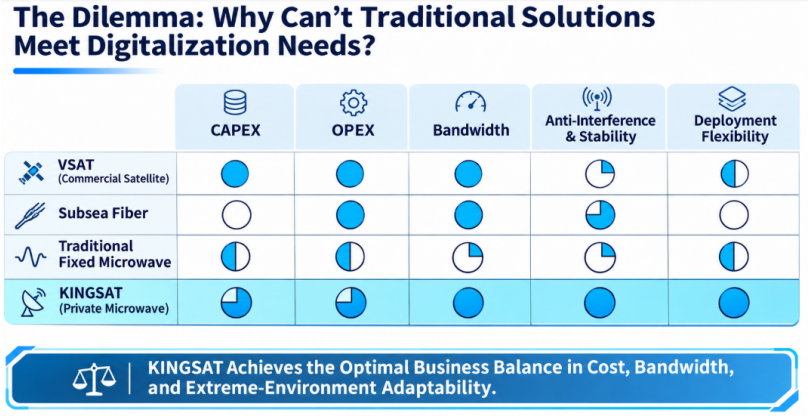
How can these “steel islands,” spread across tens of kilometers of open water, be connected efficiently? Many operators rely on commercial VSAT services, but recurring connectivity charges and limited bandwidth can be significant constraints. Subsea fiber-optic cables can cost tens of millions to install, are vulnerable to damage, and are not a practical hardwired solution for floating facilities that move and rotate.
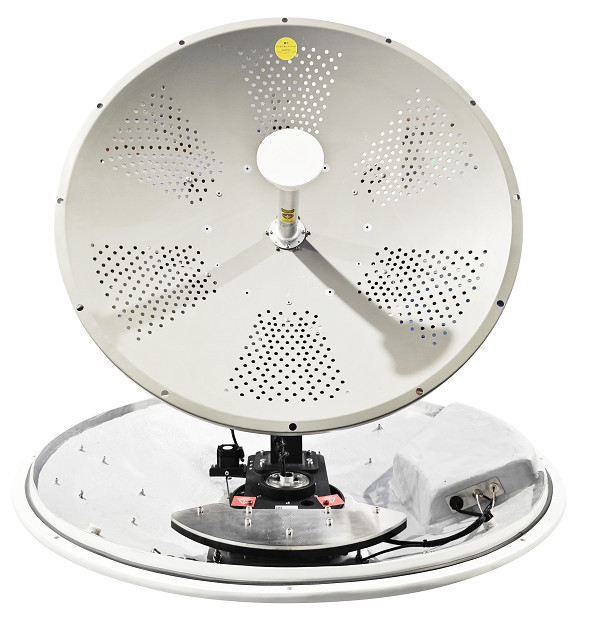
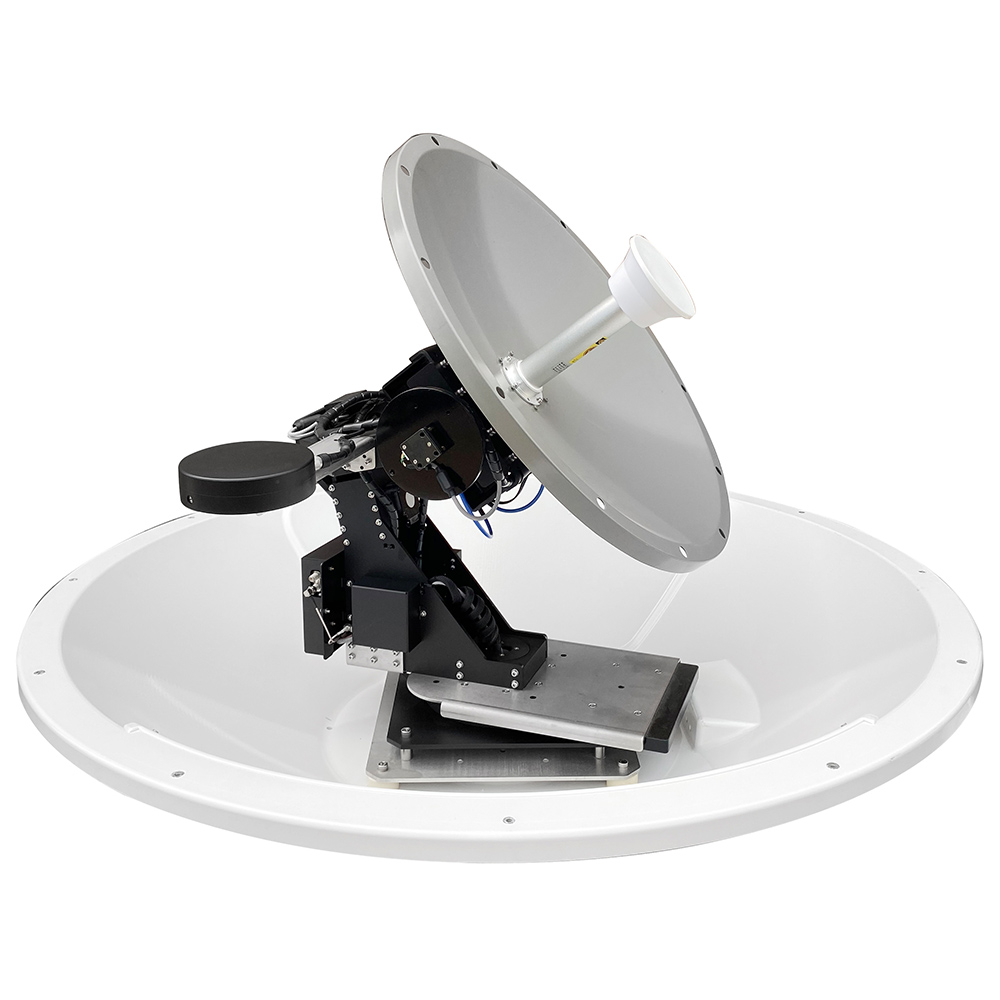
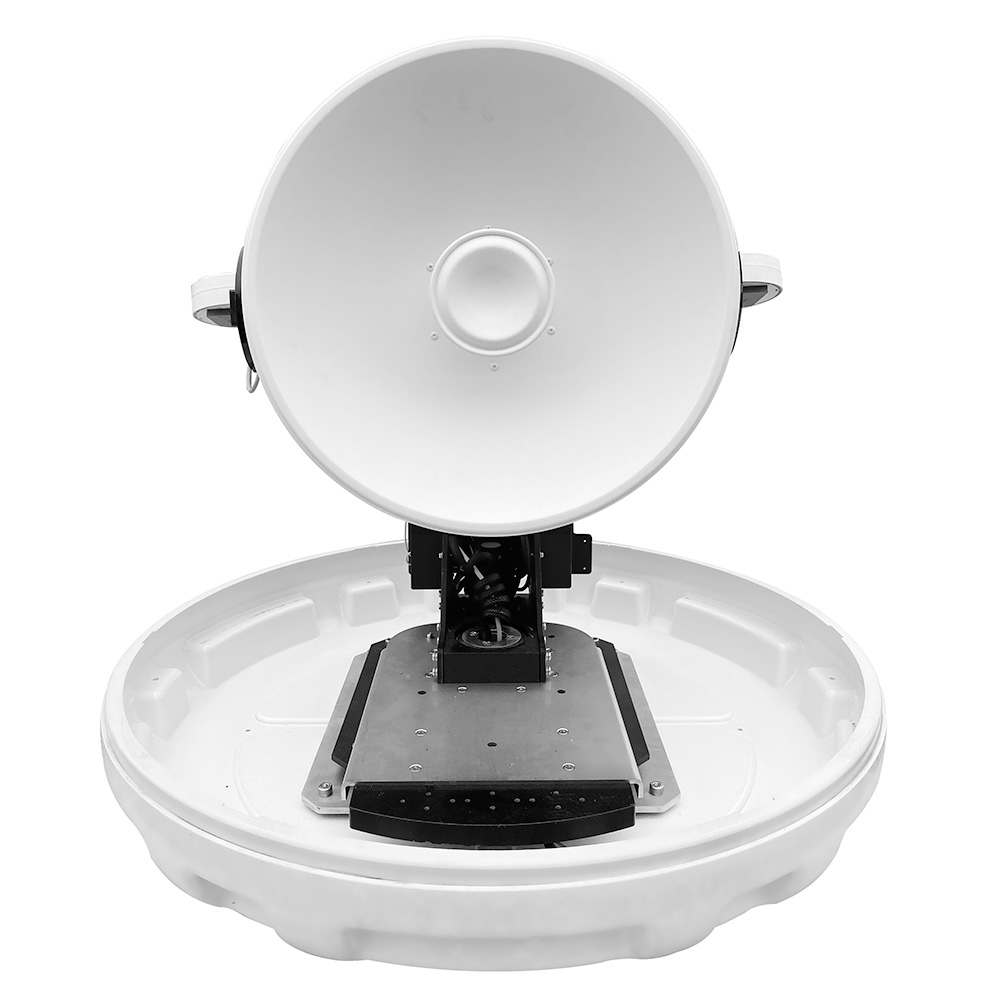
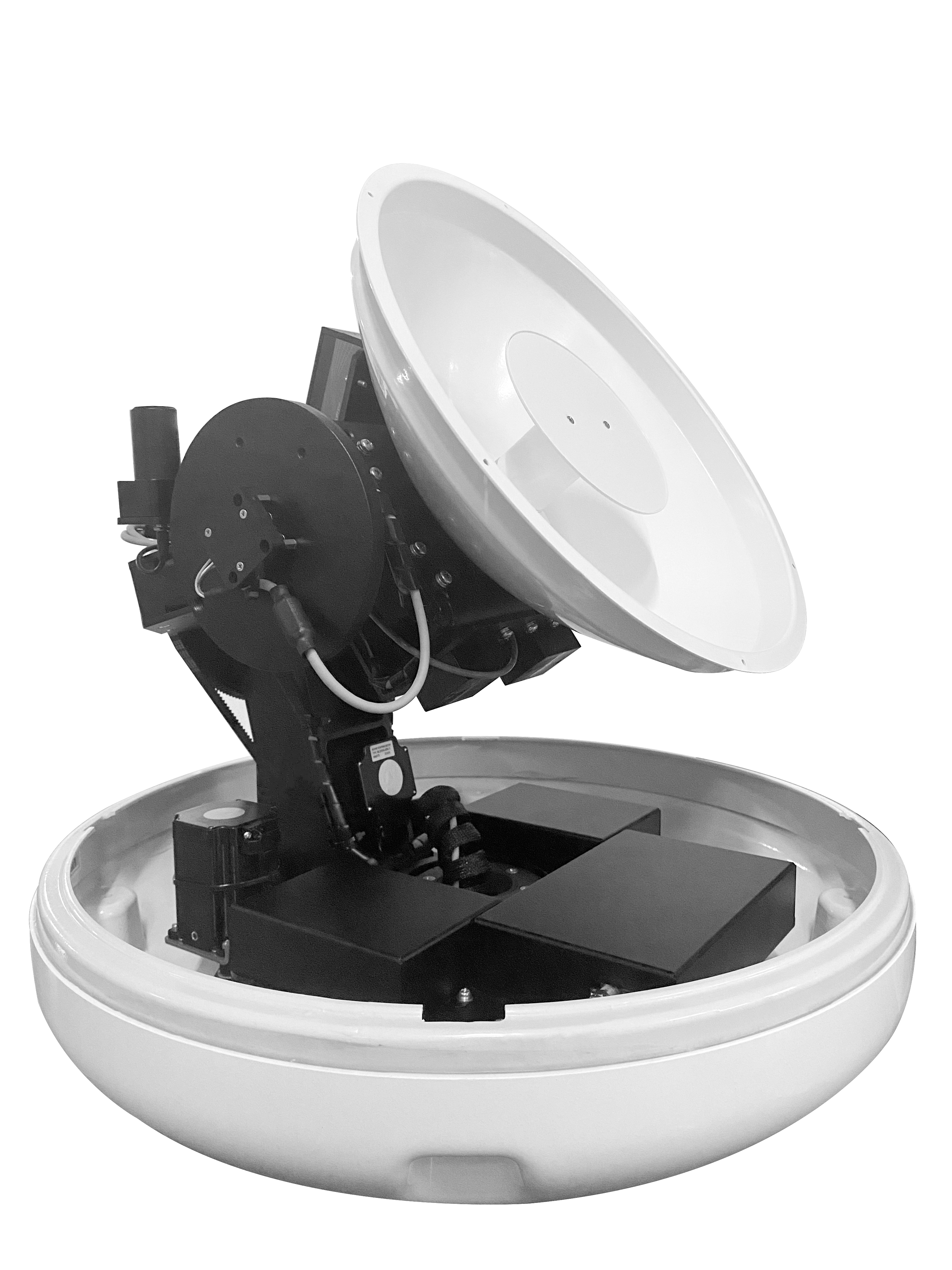
KINGSAT, a specialist manufacturer of maritime auto-tracking antennas, offers a private microwave networking solution designed for offshore oil and gas installations. Combining high bandwidth, low latency, and no recurring satellite bandwidth subscription fees for on-network traffic, it provides an alternative communications backbone for offshore energy operations.
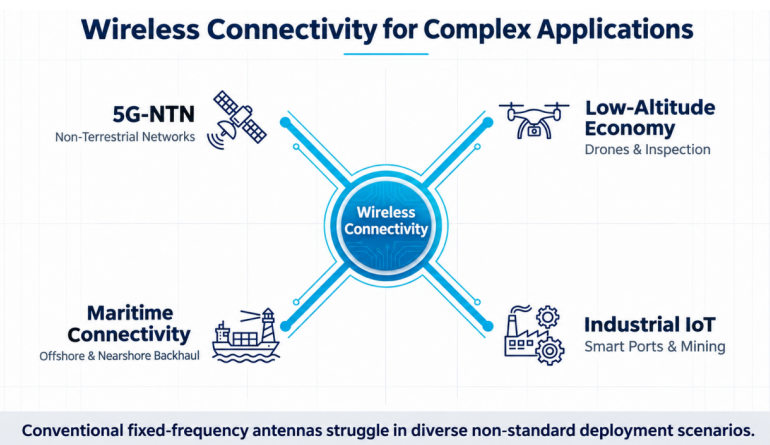
As a specialist manufacturer of automatic-tracking antennas for maritime and land-based applications, KINGSAT combines established dynamic-tracking algorithms with an open, modular architecture. Its customizable microwave antenna portfolio spans 1.4 GHz to E-Band (80 GHz) and can be adapted to a wide range of platforms—bringing greater flexibility to demanding wireless deployments.
I. Challenge: Three Barriers to Offshore Platform Connectivity
Offshore networks face a combination of financial and physical constraints that conventional connectivity approaches may struggle to address.
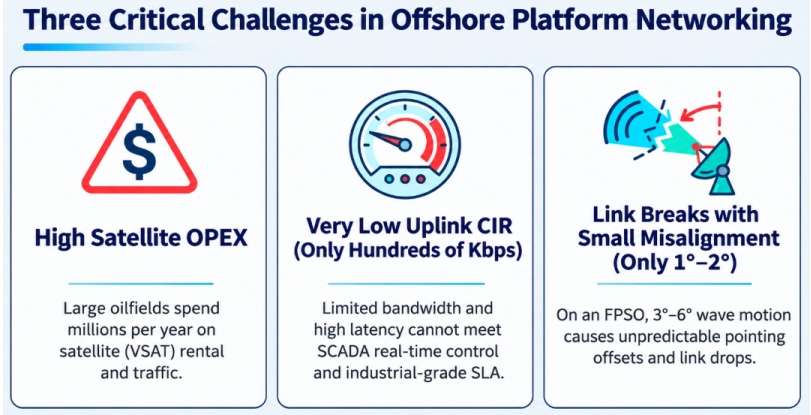
- 1. High recurring satellite costs (OPEX). Platforms are typically 5–50 km apart. Using commercial VSAT services for all inter-platform communications can lead to substantial monthly bandwidth and data charges. For large offshore fields, annual satellite connectivity costs may run into millions of RMB.
- 2. Bandwidth and latency limitations for industrial control. A commercial satellite terminal may deliver only tens of Mbps of usable bandwidth, while its committed information rate (CIR) on the uplink may be just a few Mbps or even a few hundred kbps. With latency that can reach hundreds of milliseconds, such links can struggle to meet the millisecond-level response requirements of some SCADA applications and demanding industrial service-level agreements (SLAs).
- 3. Platform motion and drift can disrupt fixed microwave links. Microwave links offer high capacity without recurring satellite bandwidth charges, but high-gain antennas have narrow beams—typically just 3°–6°. Offshore installations are rarely completely stationary:
- FPSOs and other floating platforms: These may weathervane through 360° around a single-point mooring while experiencing substantial pitch and roll.
- Fixed jacket platforms: Strong winds and heavy seas can cause angular displacement and vibration at the top of the structure.
- Standby and workboats: Their headings and attitudes change continuously during operations.
With a conventional fixed microwave antenna, even a 1°–2° pointing error can cause a sharp drop in signal strength or a complete loss of the link.
II. KINGSAT Solution: Auto-Tracking Microwave Networks for Offshore Facilities
KINGSAT combines precision maritime tracking algorithms with robust microwave hardware to build private offshore networks supporting point-to-point (PtP) backbone links, point-to-multipoint (PtMP) coverage, and decentralized mesh network expansion.
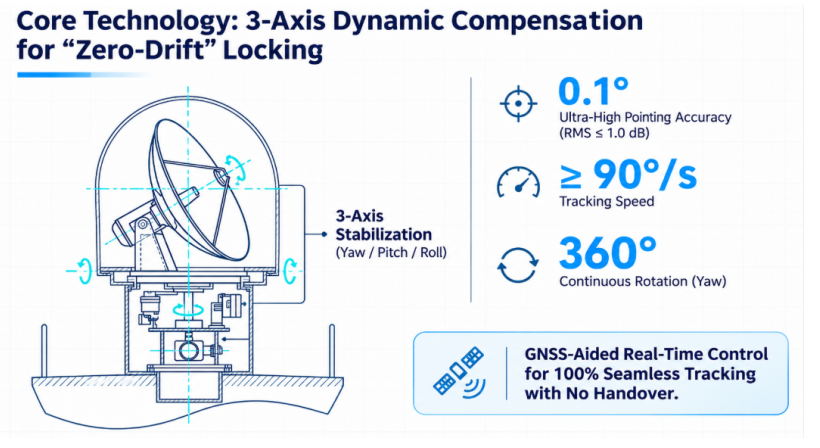
2.1 Three-Axis Stabilization and 0.1° Beam-Tracking Accuracy
- M-Series three-axis auto-tracking antennas (M4 / M6 / M8 / M9 and others): Designed for deployment on FPSOs, drilling rigs, and floating installations, these systems incorporate three-axis servo stabilization for azimuth, elevation, and roll, with continuous 360° azimuth rotation and tracking speeds of at least 90°/s.
- Precision alignment under motion: Tracking accuracy reaches 0.1°, with a stated RMS signal variation of no more than 1.0 dB. The system continuously compensates for wave-induced motion and large platform rotations to keep the antenna beam aligned with the central base station and minimize pointing-related link loss.
- Coordinate-based tracking and geofencing: By combining coordinate synchronization algorithms with geofencing, the antennas use real-time GNSS position data to calculate the direction of the target base station, align automatically, and support seamless switching between target stations.
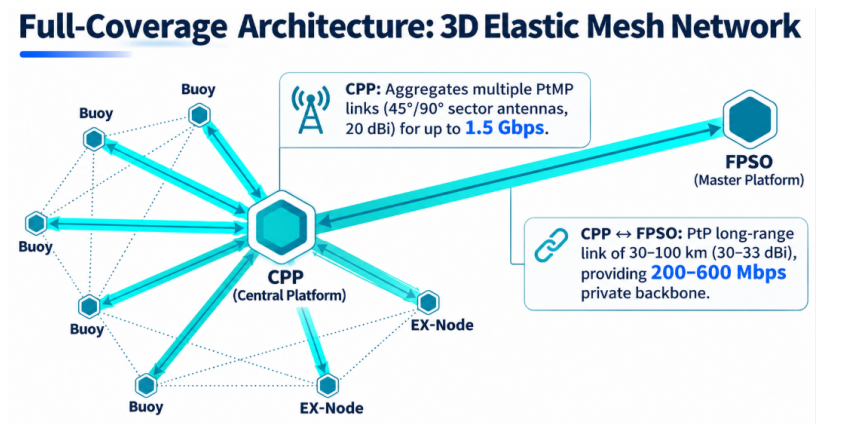
2.2 Flexible PtMP Aggregation and Long-Range PtP Backhaul
- PtMP aggregation at the central platform: A central processing platform (CPP) equipped with a main control room can host multiple dual-polarized sector antennas connected to base-station equipment. With 45° or 90° sectors and 20 dBi antenna gain, aggregate throughput can reach up to 1,500 Mbps per base station.
- Long-range, high-capacity PtP links: For key platforms separated by 30–80 km—and, in some configurations, up to 100 km—high-gain directional auto-tracking microwave antennas (30–33 dBi) can establish private backbone links with throughput of 200–600 Mbps.
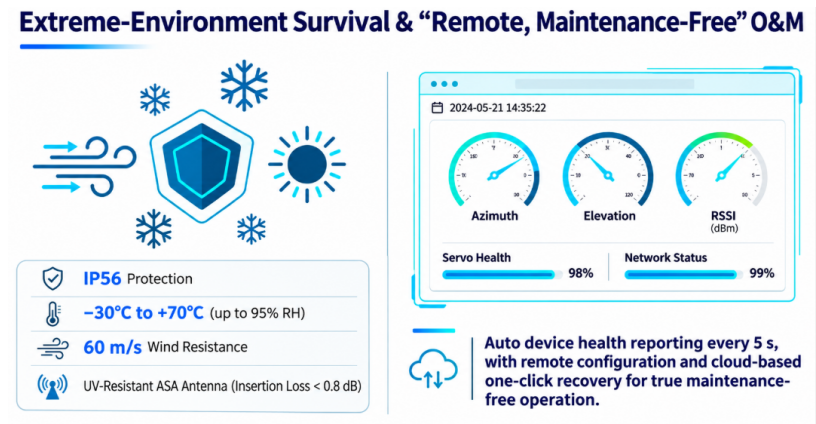
2.3 Offshore-Grade Protection and Remote Cloud Management
- Protection for demanding marine conditions: The system is rated IP56 and uses a UV-resistant ASA radome with transmission loss below 0.8 dB. The stated operating specifications cover temperatures from −30°C to +70°C, 95% humidity, and wind speeds of up to 60 m/s.
- Frequent telemetry and centralized control: Every five seconds, the system reports azimuth, elevation, received signal strength indicator (RSSI), and servo health data. Remote configuration and one-click troubleshooting help reduce the need for offshore maintenance visits.
III. Benefits: Lower OPEX and Stronger Digitalization ROI
For offshore field operators and system integrators, a KINGSAT private microwave network can deliver substantial operational and financial benefits.
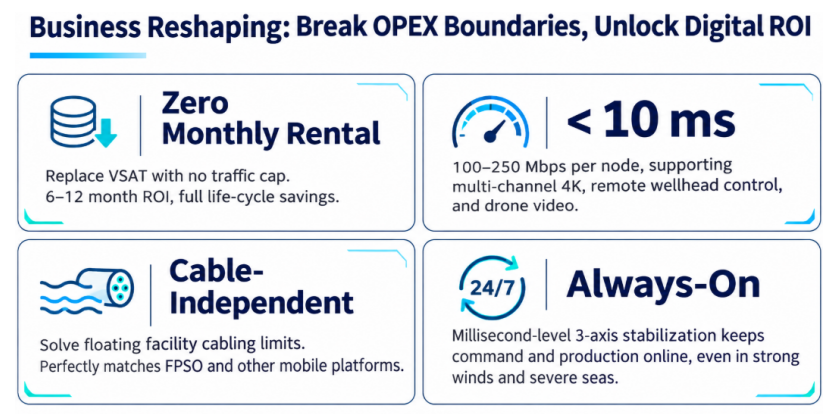
- No recurring satellite subscription fees for internal traffic: Surveillance video, inter-platform office communications, and industrial control data travel across the operator-owned microwave network without per-GB charges or recurring satellite bandwidth subscriptions. The source material estimates a payback period of 6–12 months and potential lifecycle communications OPEX savings of tens of millions of RMB.
- Fiber-like capacity with low latency: Individual nodes can deliver 100–250 Mbps or more, with one-way latency as low as under 10 ms. The network is designed to carry multiple concurrent applications, including 4K surveillance streams, remote wellhead valve control, and inspection-drone video backhaul.
- Less dependence on subsea cables: Unlike costly subsea cables that can be damaged or severed, microwave systems can be deployed flexibly and accommodate motion on FPSOs, semi-submersible platforms, and workboats—where permanent hardwired connections may be impractical.
- Resilient communications in severe sea conditions: Millisecond-level three-axis servo compensation and wind-resistant mechanical design help maintain beam alignment during storms and heavy winter seas, supporting the continuity of emergency coordination and production monitoring.

Conclusion
As the oil and gas sector accelerates digital transformation while seeking to control costs, offshore connectivity need not depend solely on costly satellite capacity or vulnerable subsea cables. With three-axis automatic tracking, customizable frequency options, and durable maritime-grade construction, KINGSAT enables high-speed, reliable microwave links between offshore assets—without recurring satellite bandwidth subscription fees for internal network traffic.
Choosing KINGSAT auto-tracking microwave networking is an investment in communications infrastructure that combines technical capability with a compelling business case for the digital transformation of offshore oil and gas operations.
Contact us: sales@kingsat-tech.com Official website: www.kingsat-tech.com
Youtube: http://www.youtube.com/@kingsatmaritimeantennas4640