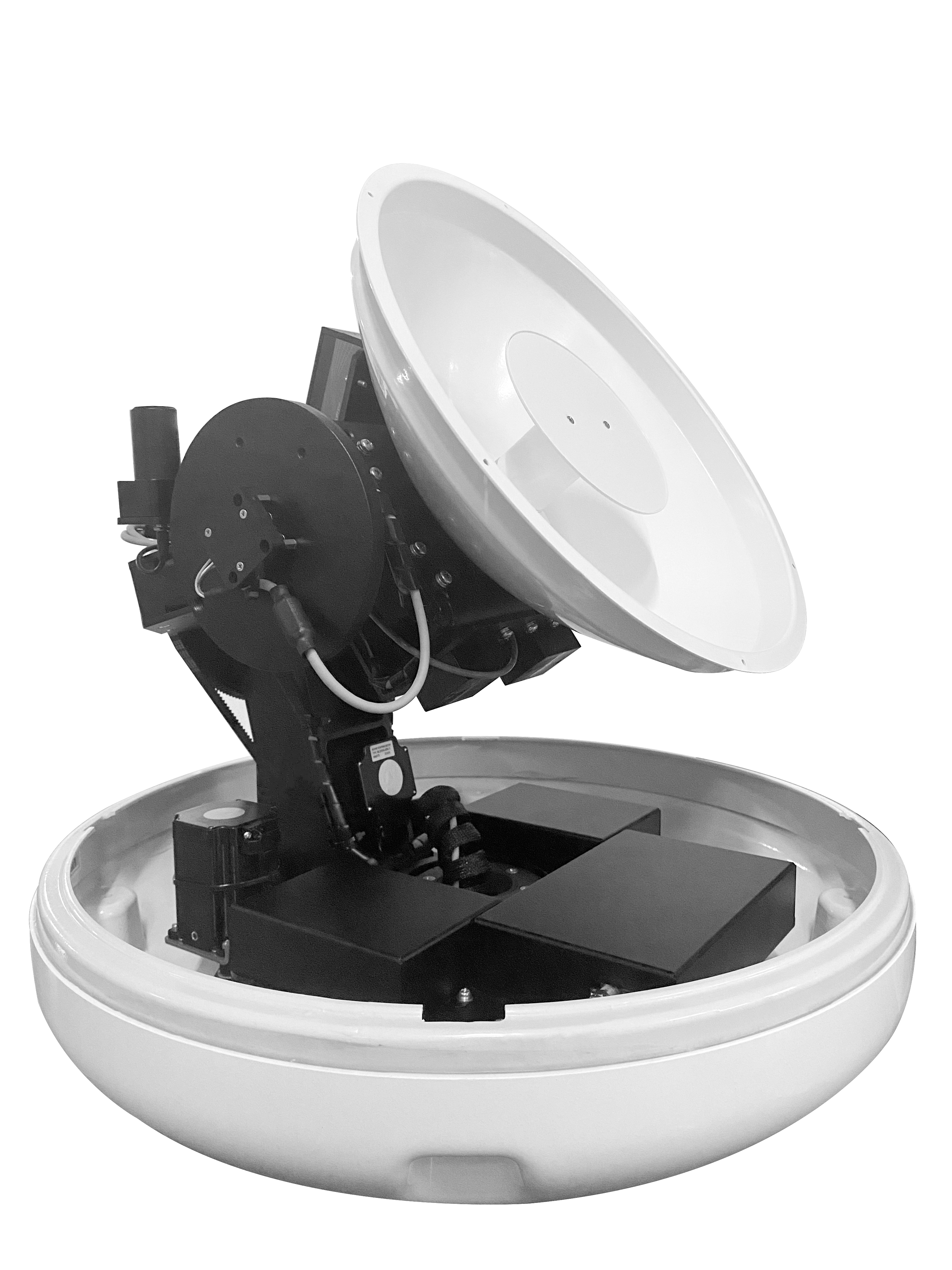

Offshore oil and gas operations are becoming increasingly digital. Offshore production platforms, drilling rigs and floating production, storage and offloading (FPSO) vessels need to transmit vast volumes of sensor data and continuous feeds from multiple surveillance cameras, while also supporting crew communications and emergency coordination. All of this depends on high-speed, reliable, low-latency connectivity.

But harsh offshore conditions and heavy seas make it difficult to build a communications backbone spanning 100 kilometres or more.
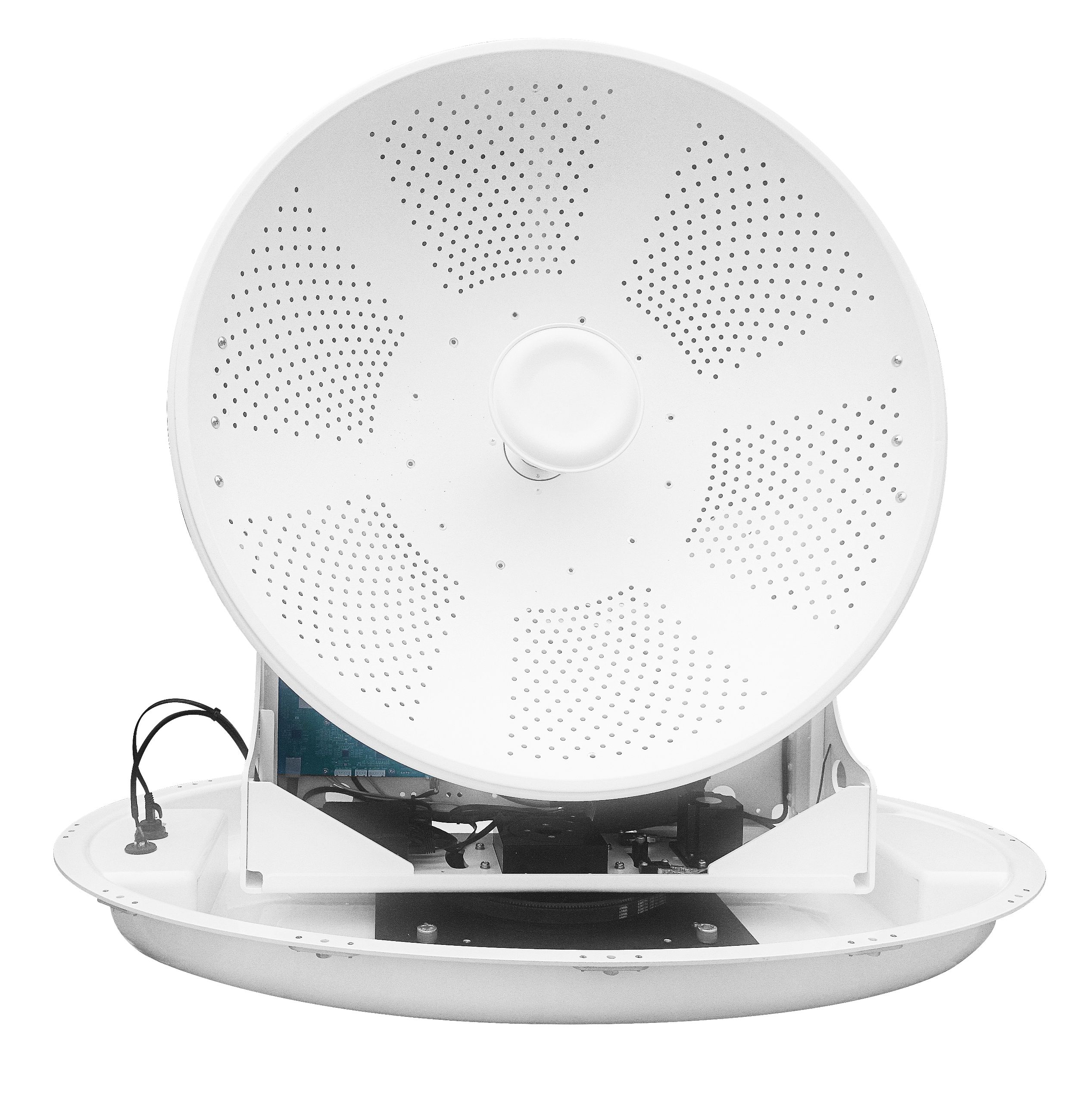
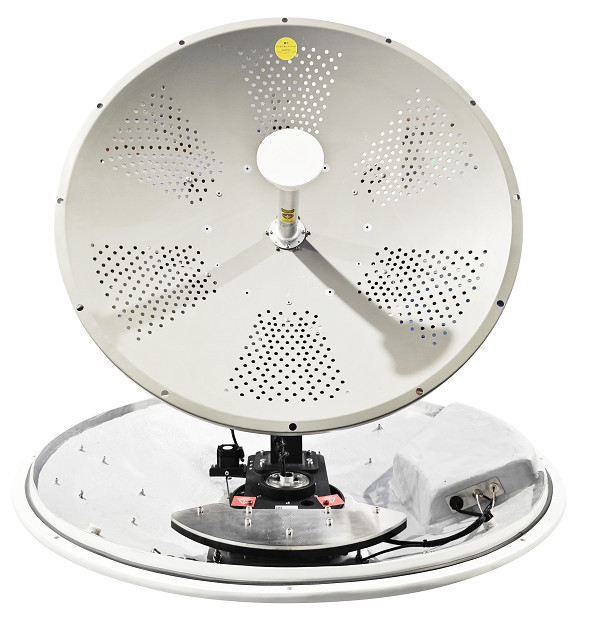
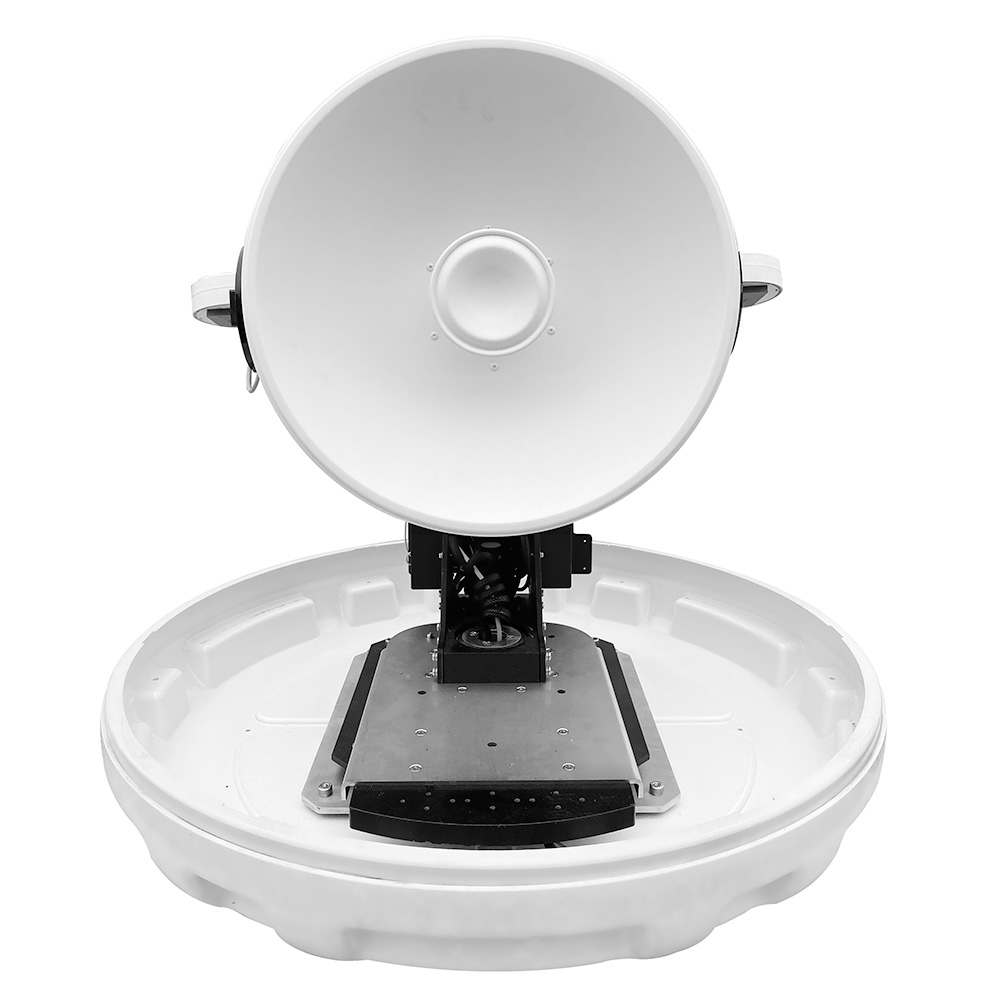
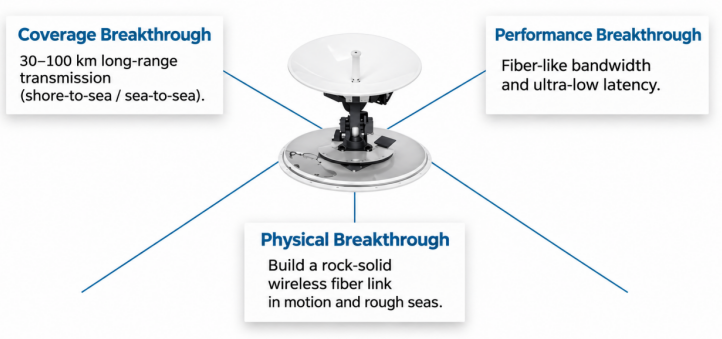
Drawing on years of experience in maritime satellite and microwave antenna tracking, KINGSAT has developed a complete auto-tracking maritime microwave solution. It enables long-range shore-to-sea and sea-to-sea microwave links over 30–100 km, providing a high-speed offshore backbone with fibre-like performance—even when platforms or vessels are in motion.
1. The Limitations of Conventional Offshore Communications
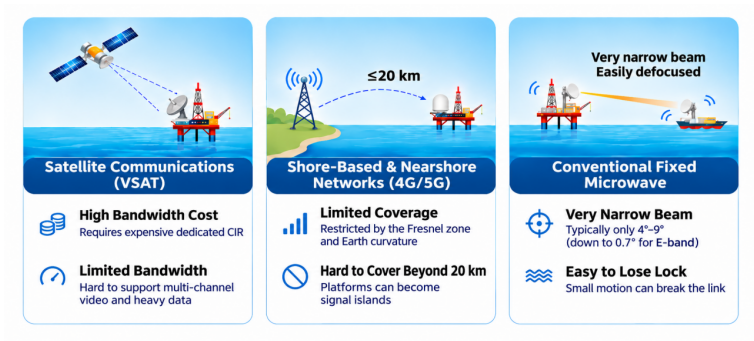
Before maritime auto-tracking microwave systems became more widely available, offshore platforms and support vessels relied primarily on three conventional connectivity options. Each faces limitations as demand grows for high bandwidth and low latency.
1.1 Satellite Communications: High Costs for Committed Bandwidth and Limited Capacity
Satellite communications remain essential for offshore operations, but bandwidth can be costly. Transmitting multiple streams of uncompressed high-definition surveillance video over VSAT may require a high committed information rate (CIR) on the uplink, resulting in substantial recurring charges. Satellite bandwidth is also finite, making it challenging to sustain bandwidth-intensive video monitoring and large-volume data backhaul.
1.2 Coastal 4G/5G Networks: Coverage Constraints Beyond the Shore
Although 4G and 5G networks offer high data rates and low latency, offshore coverage is constrained by antenna height, Earth curvature, line-of-sight conditions and Fresnel-zone clearance. With antennas installed at relatively low elevations, practical coverage may be limited to around 20 km in some deployments. Platforms farther offshore can therefore experience sharply degraded cellular or 4G-based IoT connectivity—or lose coverage altogether.
1.3 Conventional Fixed Directional Microwave: Narrow Beams and Alignment Loss
Microwave links offer high capacity without usage-based data charges, but conventional fixed directional antennas require precise alignment at both ends. Offshore platforms, FPSOs and working vessels are subject to roll, pitch and yaw caused by waves and tides. Because high-gain microwave antennas have very narrow beamwidths, even an angular shift of less than one degree—or wind-induced movement of the supporting structure—can move the antenna off its optimal pointing direction, severely weakening the signal or interrupting the link.
2. KINGSAT Auto-Tracking Maritime Microwave Solution
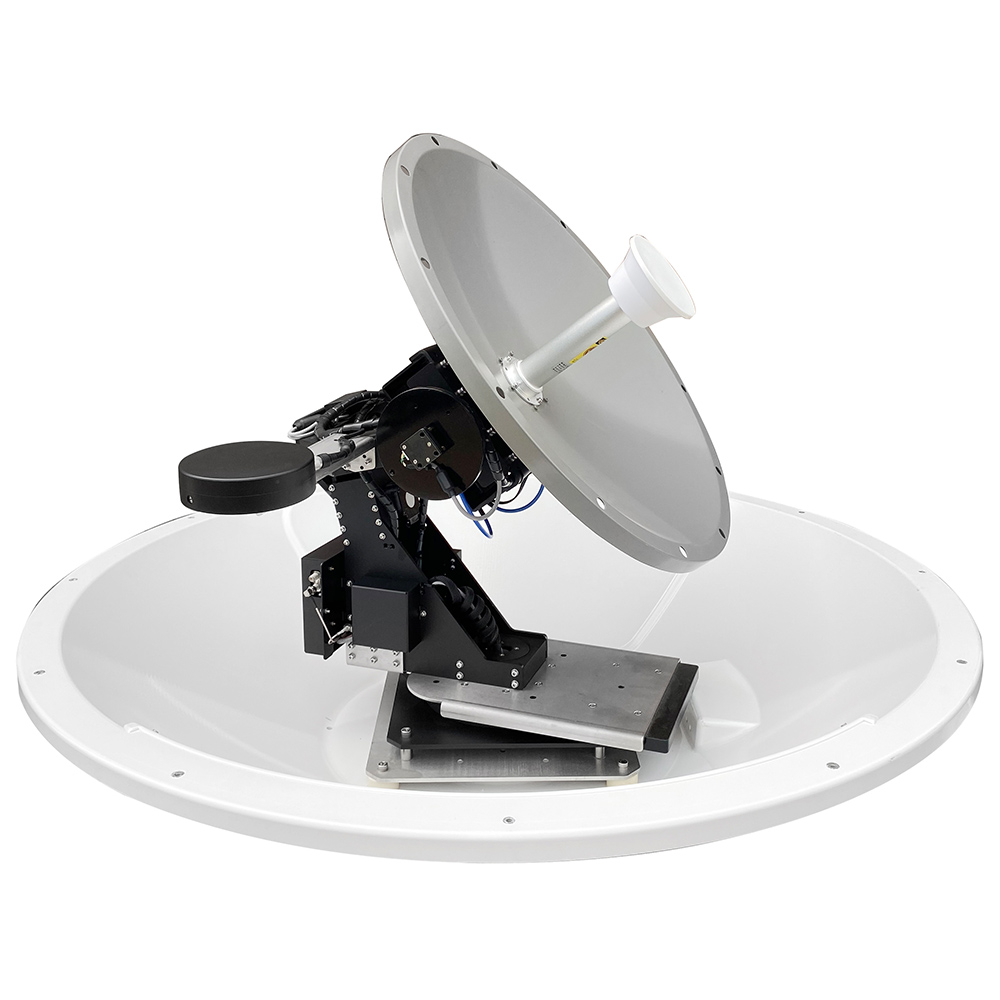
To address these challenges, KINGSAT combines high-capacity microwave transmission with advanced two-axis and three-axis servo tracking. The result is a high-speed wireless backbone designed to maintain alignment between moving offshore assets and their communication endpoints.
2.1 Three-Axis Stabilised Servo Tracking: Accurate Beam Alignment in Rough Seas
At the heart of the solution is a three-axis stabilised servo-tracking platform. Integrated high-precision gyroscopes and a GPS module help the system detect changes in roll, pitch and yaw in real time. Its servo-control algorithms drive the motors to make millisecond-scale pointing corrections, keeping the high-gain parabolic antenna aligned with a shore-based microwave station or an antenna on a neighbouring platform. This continuous dynamic tracking helps maintain a stable link even as the vessel or platform moves in rough seas.
2.2 High Throughput, Low Latency: A Fibre-Like Offshore Backbone
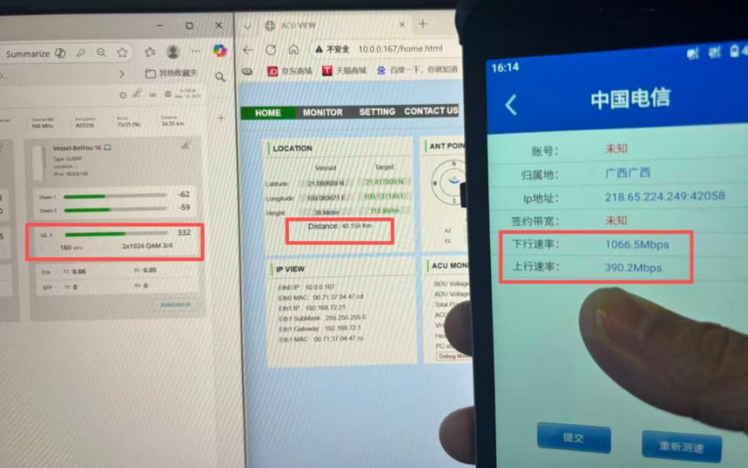
KINGSAT maritime microwave systems can deliver throughput of up to 1,500 Mbps, with latency in the single-digit millisecond range under suitable operating conditions. This capacity can support demanding applications, including multiple uncompressed 4K video feeds, industrial IoT data collection and simultaneous voice communications, offering a high-capacity alternative to conventional satellite links.
2.3 Flexible Configuration: Multiple Frequency Bands and Modem Options
Frequency-band options. A typical operating frequency is 5.8 GHz. Subject to radio-frequency planning and applicable national regulations, KINGSAT can customise antenna systems for frequencies ranging from 1.4 GHz for extended-range applications, through 5.8 GHz industrial wireless bridges, to 18 GHz, 23 GHz and E-band millimetre-wave (mmWave) systems.
Integrated modems. Antenna assemblies can be configured to accommodate microwave radio equipment from major suppliers, including RADWIN, Cambium, Ceragon and Aviat. This integrated approach can simplify system integration and offshore installation.
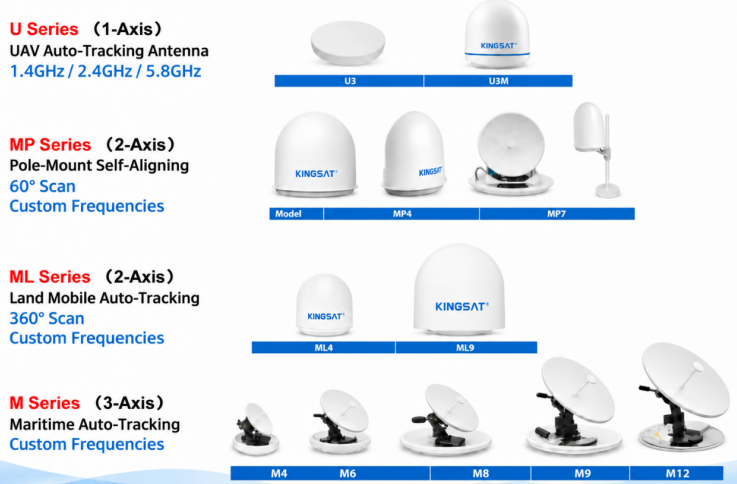
2.4 A Complete Product Family for Different Applications
3. KINGSAT Maritime Microwave vs. Conventional Connectivity Options
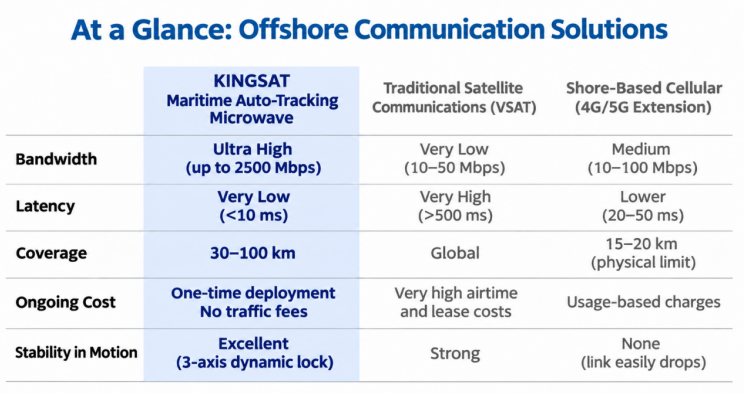
4. The Value KINGSAT Brings to Offshore Operations
Choosing the KINGSAT auto-tracking maritime microwave solution is more than an equipment upgrade. It can help offshore operators strengthen the communications infrastructure supporting their digital operations.
4.1 Up to 100 km of Reach: Connecting Remote Offshore Assets
With appropriately positioned shore stations or towers—for example, coastal high ground or towers exceeding 100 metres in height—KINGSAT microwave tracking systems can establish high-speed broadband links across 80–100 km of open water. This enables offshore platforms to connect to onshore networks and access the bandwidth needed for increasingly data-intensive operations.
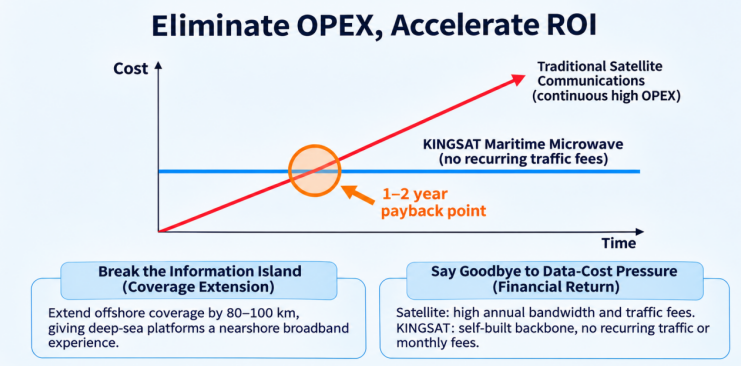
4.2 Lower Operating Expenditure and Faster Payback
A microwave backbone generally involves an upfront capital investment rather than recurring usage-based data charges. Compared with offshore satellite services that can cost hundreds of thousands or even millions of yuan annually, the KINGSAT solution may recover its equipment and deployment costs within one to two years in suitable scenarios. Actual payback and ongoing costs depend on network design, licensing, maintenance and the services being replaced.
4.3 Marine-Grade Design and Remote Management
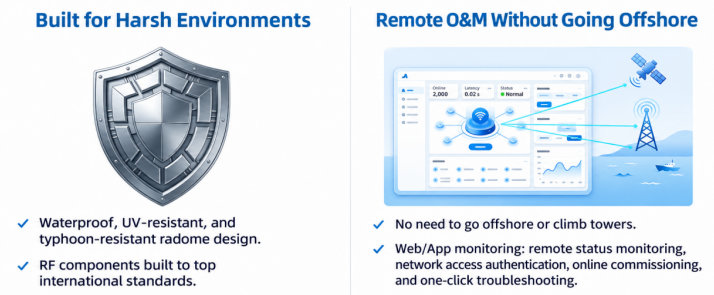
The antenna radome is designed for maritime environments, with protection against water ingress, ultraviolet exposure and severe wind conditions. Critical components are selected to meet demanding quality requirements, including RF components comparable in grade to those used by leading satellite antenna manufacturers. KINGSAT also offers remote antenna monitoring and management through a web interface and mobile app, enabling shore-based technicians to check system status, manage network access, perform remote configuration and troubleshoot equipment without routinely travelling offshore.
Conclusion
Reliable, high-bandwidth and low-latency connectivity is essential to safe and efficient offshore oil and gas operations. By combining throughput of up to 1,500 Mbps, link distances of up to 100 km and precision three-axis dynamic tracking, KINGSAT’s maritime microwave solution offers a powerful way to extend high-speed connectivity across offshore networks.
Contact us: sales@kingsat-tech.com Official website: www.kingsat-tech.com
Youtube: http://www.youtube.com/@kingsatmaritimeantennas4640