
As offshore operations become increasingly digital, applications such as HD video surveillance, IoT data collection, video conferencing, and crew communications are driving demand for higher bandwidth, lower latency, and more reliable offshore connectivity.
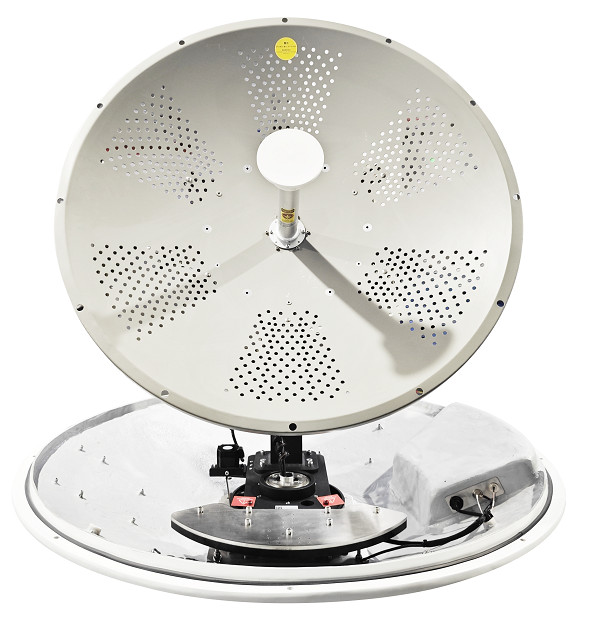
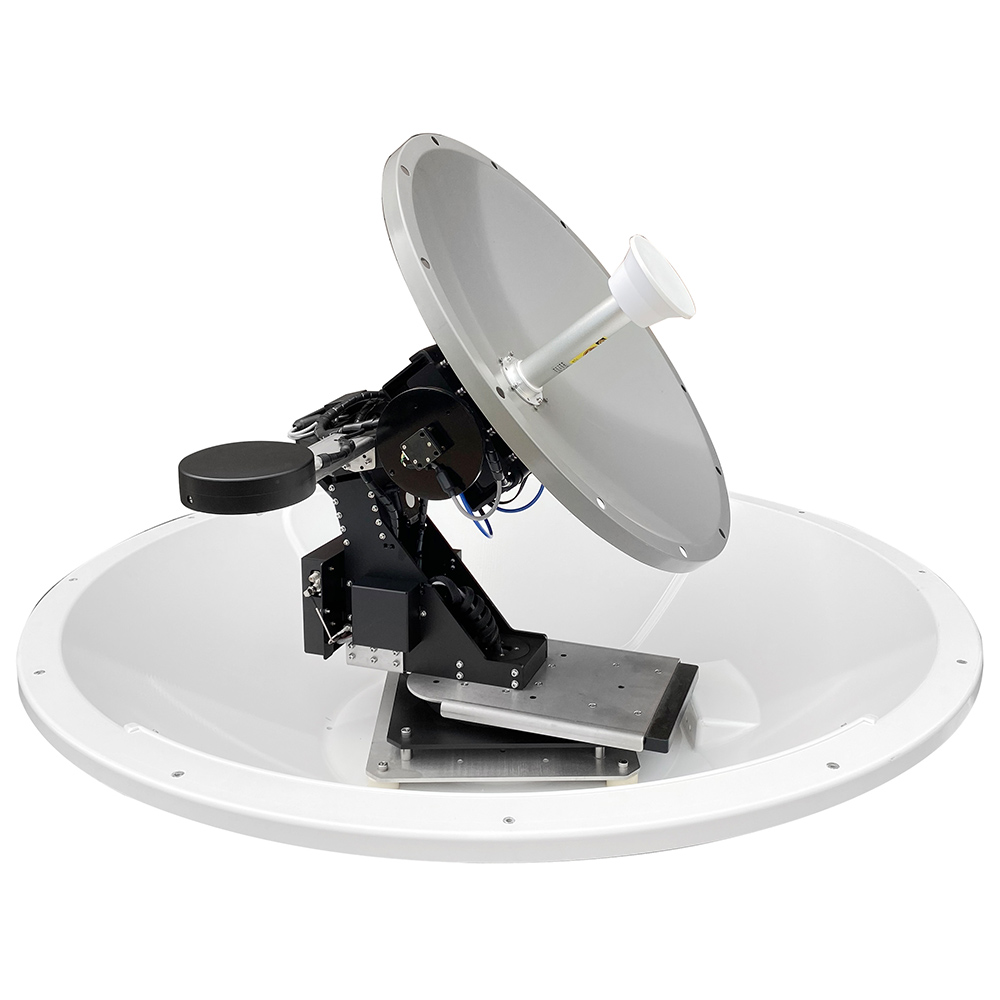
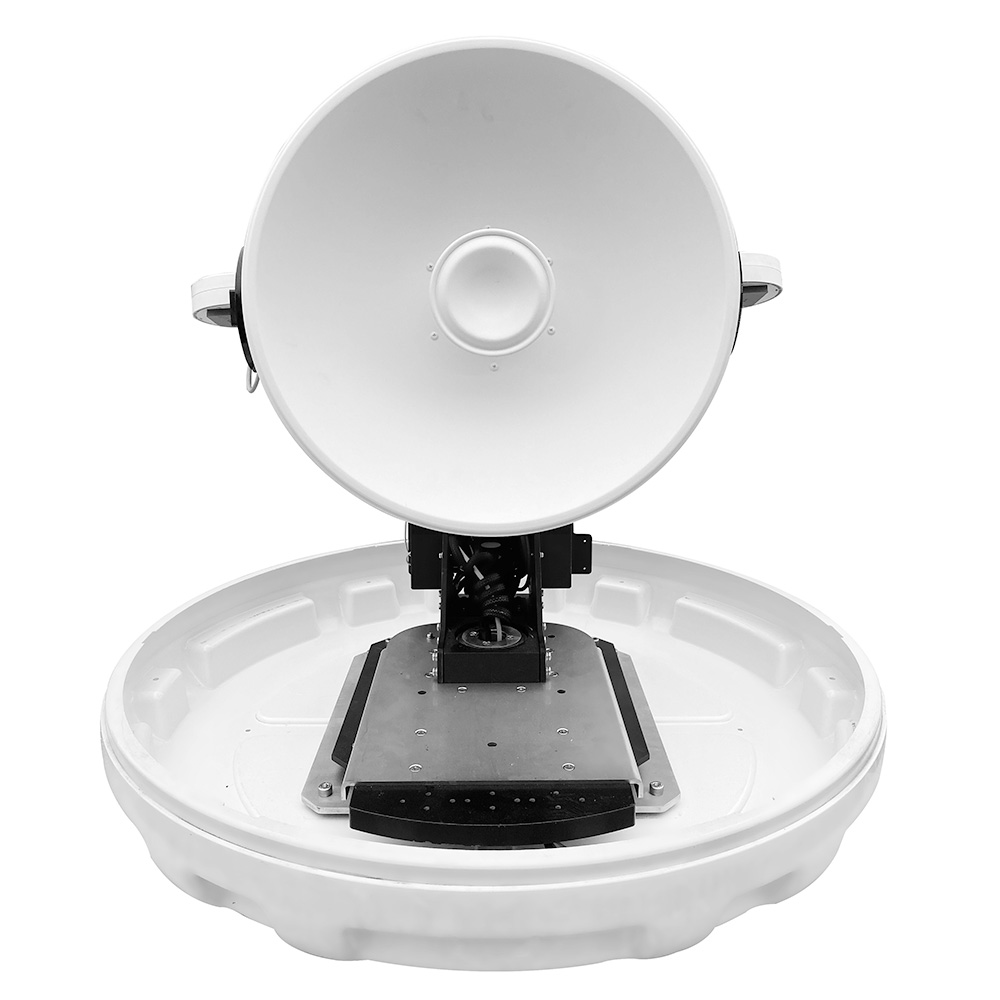
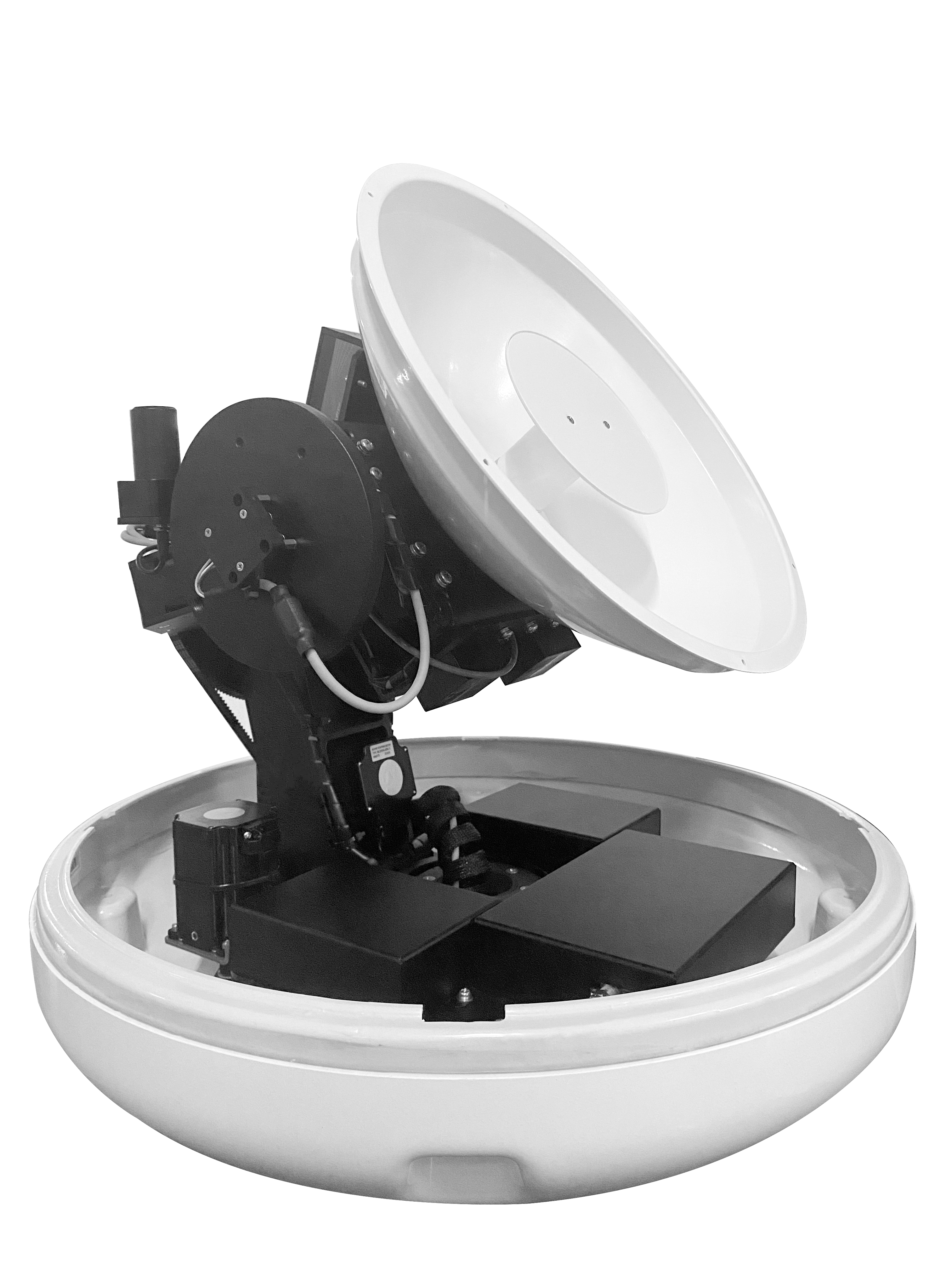
To meet these demands, KINGSAT has developed its Maritime Microwave Auto-Tracking Antenna, drawing on extensive experience in marine wireless communications. Engineered for shore-to-sea and ship-to-ship links of up to 100 km, the system provides high-capacity, low-latency wireless backhaul for reliable real-time connectivity in offshore operations.

Industry Challenges: Three Key Challenges in Offshore Communications
Offshore oil and gas platforms, wind turbines, and engineering vessels operate in harsh marine environments. Their communication systems face complex physical and technical challenges that are rarely encountered on land:
High Cost and High Latency of Satellite Communications
· High Operating Costs: Traditional maritime satellite connectivity typically comes with recurring monthly fees, and data-intensive applications such as HD video backhaul can significantly increase operating costs.
· High Latency: GEO satellites introduce significant latency, which can affect time-sensitive applications such as video conferencing and real-time industrial control.
· Limited Bandwidth Capacity: When multiple HD cameras transmit simultaneously for offshore drilling safety monitoring, available satellite bandwidth can quickly become a bottleneck.
Narrow-Beam Alignment at Sea:
Long-distance microwave links of up to 100 km require high-gain directional parabolic antennas. However, these antennas have extremely narrow beams, typically around 3° to 9°. At sea, vessels and moored buoys can experience significant roll, pitch, and yaw caused by wind and waves. Such movements can quickly throw the antenna out of alignment with the remote terminal, causing the link to lose lock and potentially resulting in complete communication loss.
Built for Harsh Marine Conditions and Typhoons:
Offshore equipment faces harsh conditions every day, including salt spray, high humidity, strong UV radiation, and typhoons. Conventional terrestrial microwave antennas are not designed for long-term operation in such environments. If a typhoon causes antenna misalignment or mechanical damage, manual maintenance on offshore towers can be costly and risky.
KINGSAT Solution: Up to 100 km High-Capacity Wireless Backhaul
To address these challenges, KINGSAT combines high-quality core components with over 20 years of RF expertise and more than 7 years of experience in maritime antenna R&D. The result is a high-capacity, low-latency microwave auto-tracking antenna designed to withstand typhoons and deliver reliable communications in demanding offshore environments.
KINGSAT Maritime Microwave Product Portfolio
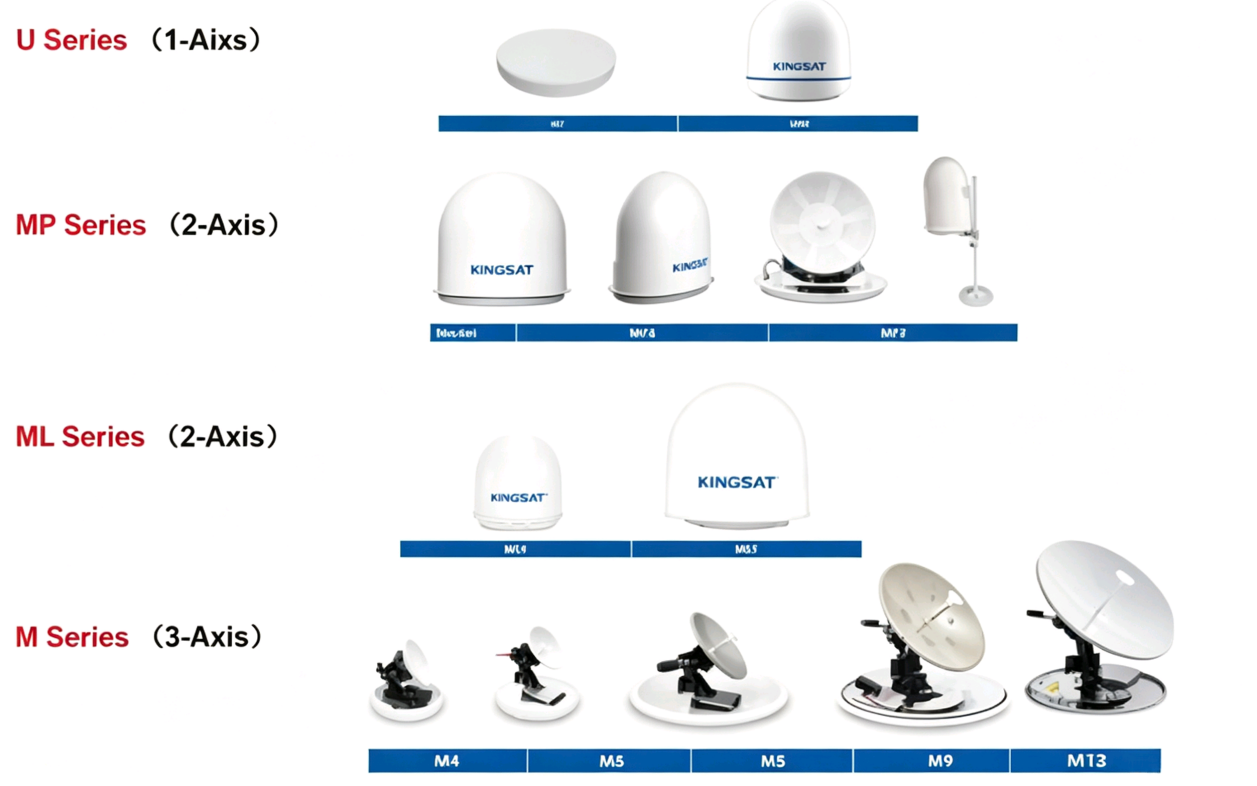
Five Core Technologies of the KINGSAT Maritime Microwave Antenna
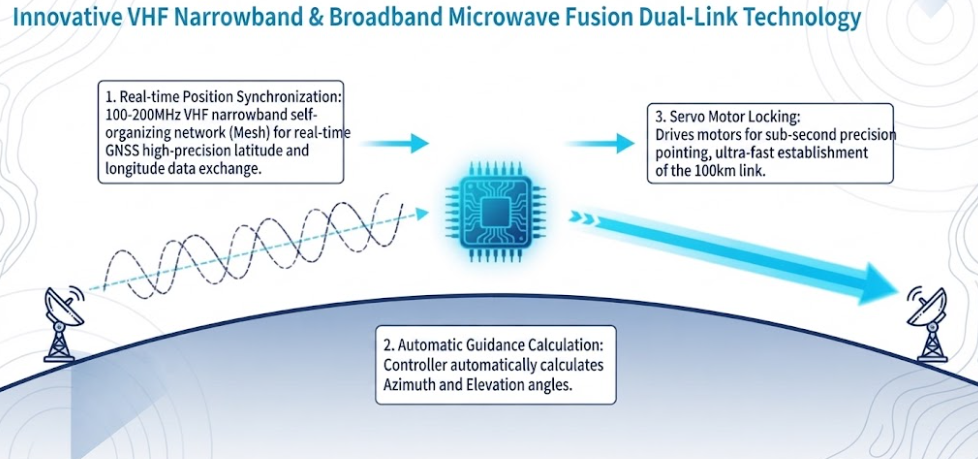
1. 100km Auto-Alignment Powered by Integrated VHF Narrowband
At 80 to 100 km, shore-to-sea and ship-to-ship links approach the practical limits of line-of-sight communication. Rapidly locating the remote terminal and establishing a link is critical. KINGSAT addresses this challenge by combining VHF narrowband data with broadband microwave communication for fast positioning and automatic alignment.
Real-time position synchronization: Both terminals integrate VHF narrowband radios with self-organizing (Mesh) networking capabilities. When the terminals undergo significant positional changes at sea, the VHF network enables the two ends to exchange high-precision GNSS latitude and longitude data reliably and in real time over distances of up to 100 km.
Automatic alignment calculation: Based on the real-time coordinates received from both ends, the controllers automatically calculate the required azimuth and elevation angles and drive the servo system for rapid and precise alignment.
2. Three-Axis Active Stabilization and Proprietary Dynamic Signal Optimization
To handle vessel movement caused by wind and waves, KINGSAT M Series antennas, including the M4, M6 and M9, feature high-precision inertial sensors and a three-axis stabilization system.
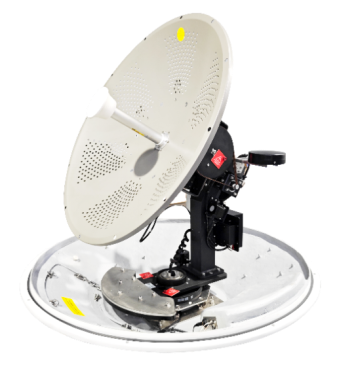
Roll and Pitch Compensation: The system automatically compensates for vessel movement caused by navigation, turning, wind, and waves, keeping the narrow microwave beam accurately aligned with the remote base station.
Dynamic Signal Optimization: After the link is established, the built-in high-dynamic optimization algorithm automatically makes fine adjustments to the antenna pointing direction, continuously searching for the strongest signal peak based on RSSI and SNR. This helps keep the aggregated link throughput at its optimal level as conditions change.
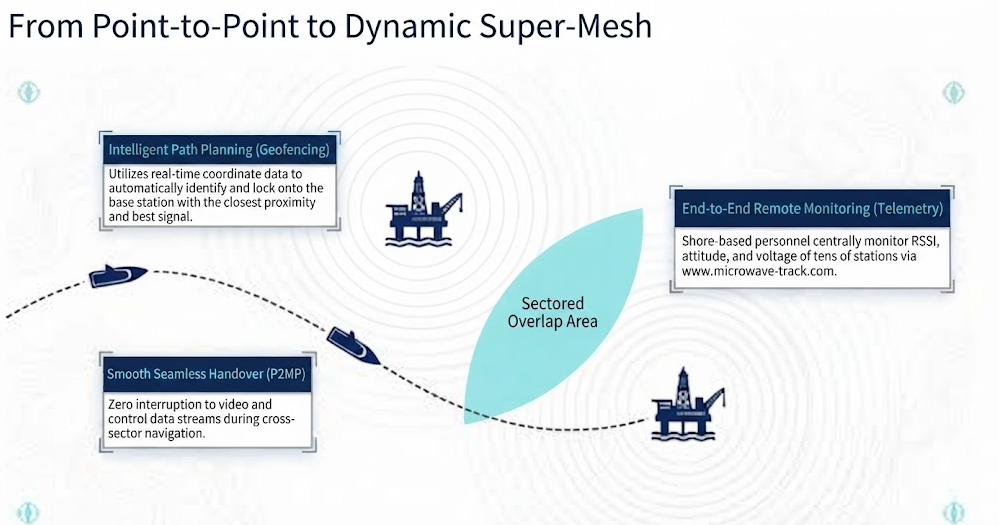
3. Geofencing and Intelligent Multi-Base-Station Handover
For service vessels operating between multiple oil and gas fields, offshore wind farms, and other work areas, KINGSAT M Series terminals support geofencing and automatic multi-base-station management.
Intelligent route-based selection: Based on the vessel's real-time position, the antenna can automatically identify and connect to a suitable shore-based or platform-based microwave station according to its location and signal conditions.
Smooth handover: The system supports intelligent P2MP handover between coverage areas, allowing the communication link to transition smoothly as the vessel moves and helping maintain continuous video and data transmission.
4. Integrated Architecture with Built-In Modem Options
KINGSAT microwave tracking antennas simplify traditional split architectures by integrating the antenna and modem into a unified system.
Integrated and deployment-ready: High-gain parabolic antennas integrate seamlessly with carrier-grade, high-throughput microwave modems, with customized integration available for major platforms such as Radwin, Cambium, Ceragon, Aviat, and UBNT.
Flexible frequency customization: While the standard operating frequency is 5.8 GHz, customizable options spanning 1.4 GHz, 6 GHz, 7 GHz, 8 GHz, and mmWave bands are available to meet different national and industry spectrum requirements. The maximum net aggregate throughput can reach up to 2,500 Mbps.
5. Industrial-Grade Protection and Reduced Maintenance Requirements
The antennas support pole or platform mounting and meet IP56 protection requirements.
The radome uses materials designed to withstand UV exposure, high salt spray, and fungal growth. A dedicated Lock Bar mechanism helps secure the antenna during severe weather conditions and reduces the risk of pointing deviation.
Reduced need for on-site maintenance: The system supports remote configuration, monitoring, firmware updates, and troubleshooting, significantly reducing the need for personnel to climb towers or access offshore platforms for routine maintenance.
Customer Benefits: High-Bandwidth, Ultra-Low-Latency Offshore Connectivity
The KINGSAT Maritime Microwave Backhaul System delivers both technical and operational benefits for offshore oil & gas and wind farm operators.
Business Benefits: Lower Connectivity Costs and Faster ROI
No recurring bandwidth charges: Unlike subscription-based satellite connectivity, a dedicated microwave link does not require recurring bandwidth or traffic fees. With a one-time investment in the required infrastructure, operators can reduce long-term connectivity costs and improve the return on their network investment.
Technical Benefits: Up to 2,500 Mbps Throughput and <10 ms Latency
Fiber-like connectivity: Microwave throughput can reach up to 2,500 Mbps, providing ample capacity for high-bandwidth applications such as multi-channel HD video surveillance, IoT data transmission, and video conferencing. A single-hop link can support dozens of 1080P cameras, depending on the network configuration and actual traffic requirements.
Mission-Critical, Ultra-Low Latency: With typical single-hop latency below 10 milliseconds, the system is well suited to real-time applications such as SCADA, DCS, industrial monitoring, and operational data transmission on offshore drilling platforms.

Operational Benefits: Intelligent 24/7 Closed-Loop Monitoring for High Availability
Dual-End Real-Time Telemetry: Real-time telemetry software is deployed at both shore-based and offshore stations to continuously monitor system status and performance.
Centralized Cloud Management: Shore-based engineers can access the centralized cloud platform at www.microwave-track.com 24/7 to monitor dozens of offshore sites at a glance. Real-time data—including antenna azimuth and elevation angles, received signal strength (RSSI), operating temperature, and power supply voltage—enables comprehensive remote monitoring and management, helping engineers quickly identify and diagnose potential issues.
Conclusion
As an innovator in maritime microwave communications, KINGSAT has engineered its Auto-Tracking Antenna System to solve two critical challenges in long-distance offshore links: maintaining stable alignment amidst vessel motion and ensuring reliable operation in harsh marine environments.
By integrating ultra-long-range connectivity, three-axis active stabilization, intelligent handover, and cloud-based management, KINGSAT delivers a high-capacity, robust wireless backbone for offshore oil and gas platforms, deepwater drilling rigs, and wind farms.
Contact us: sales@kingsat-tech.com Official website: www.kingsat-tech.com
Youtube: http://www.youtube.com/@kingsatmaritimeantennas4640