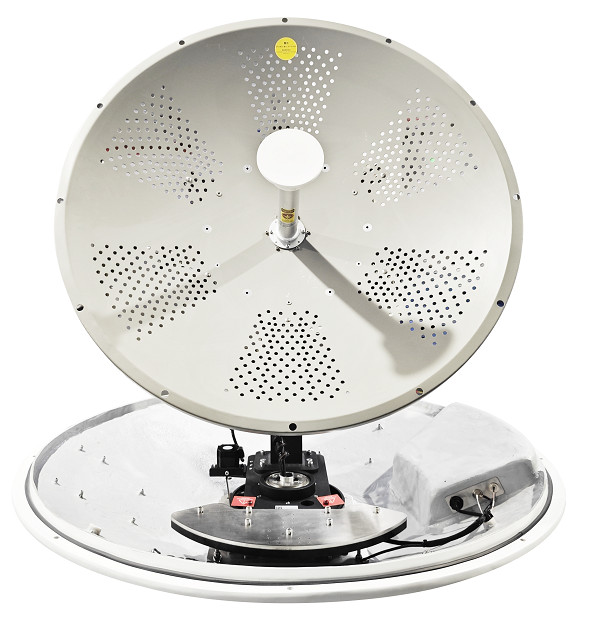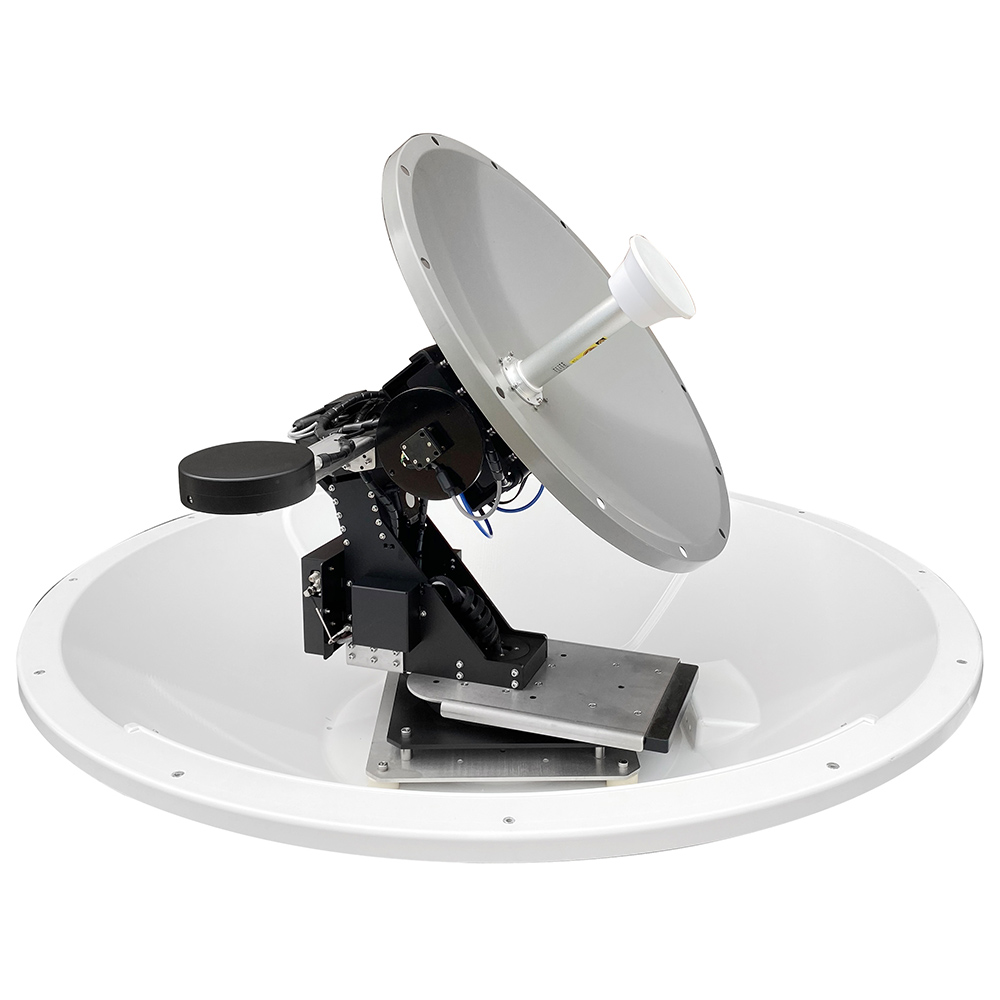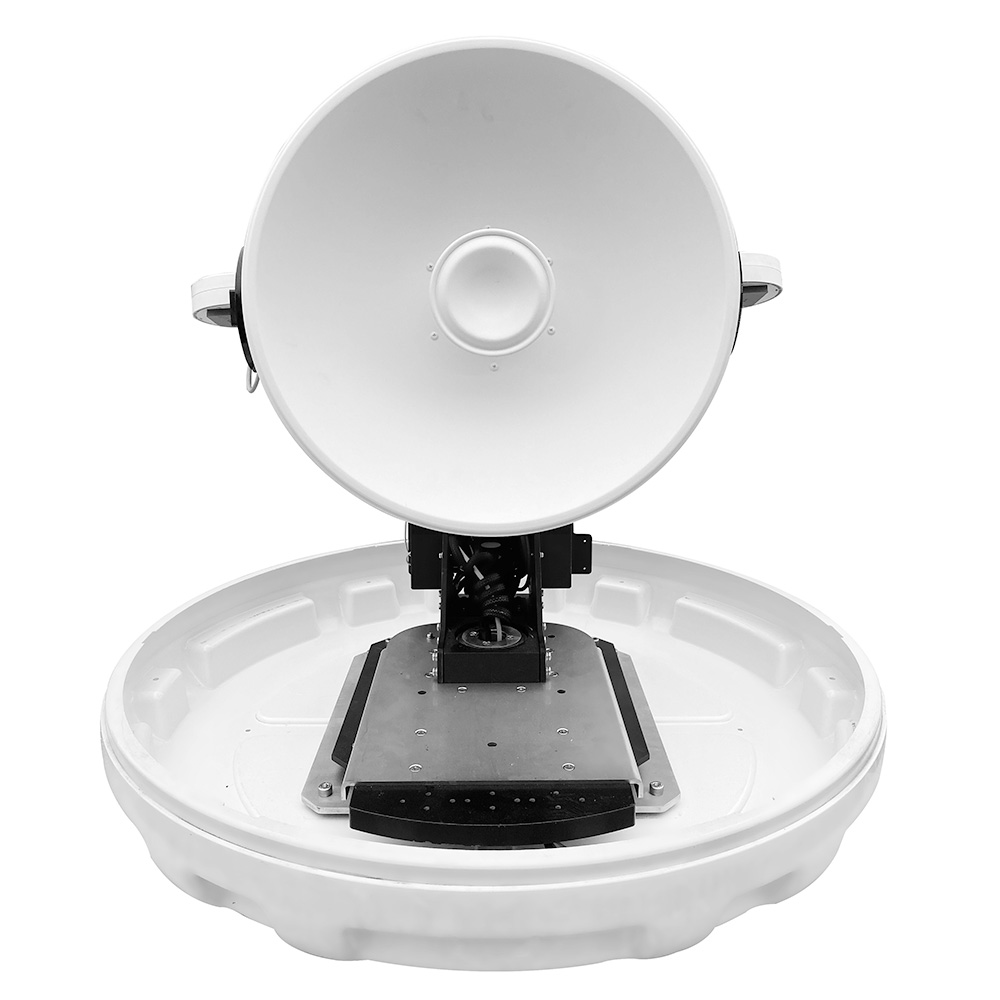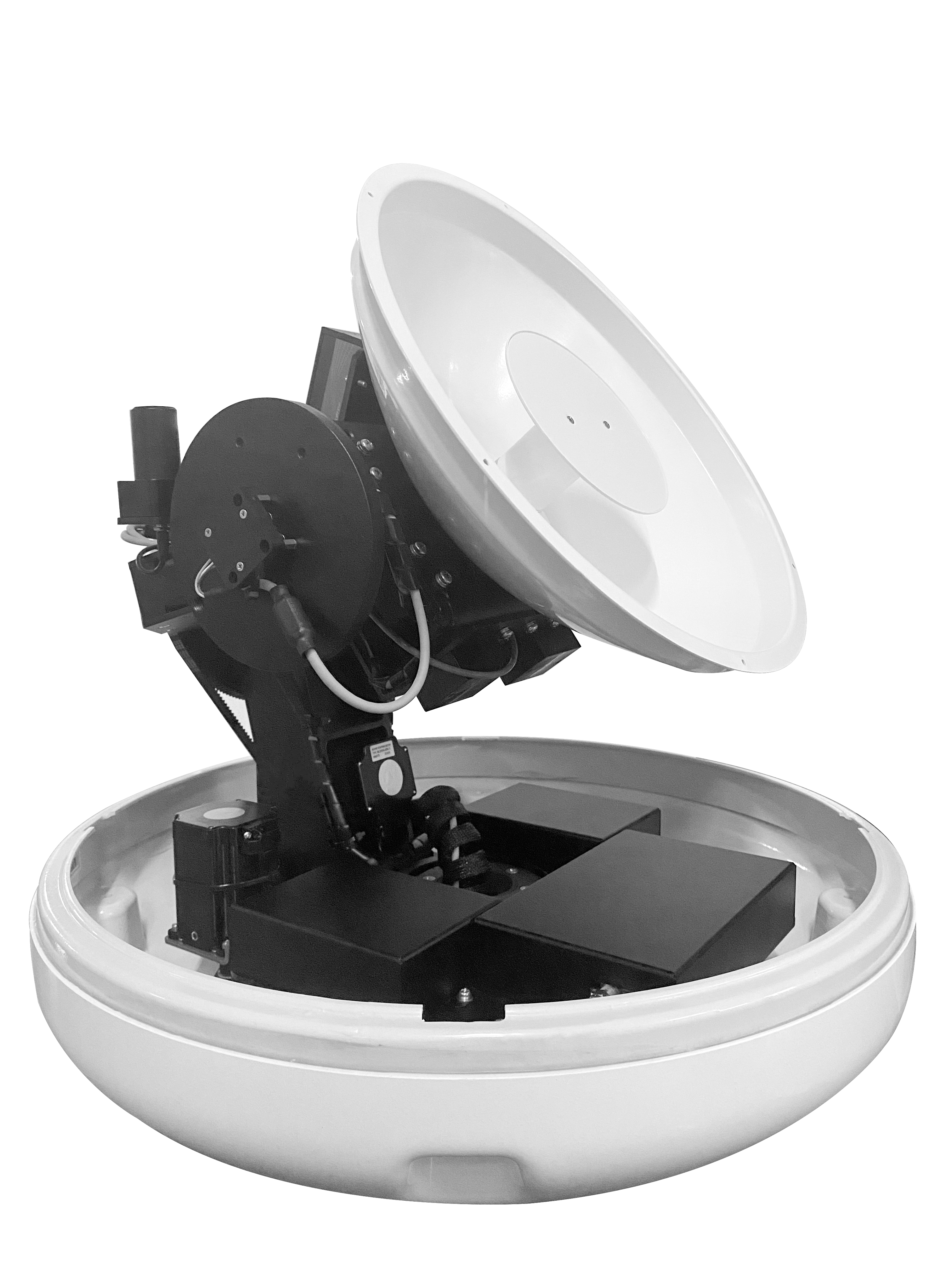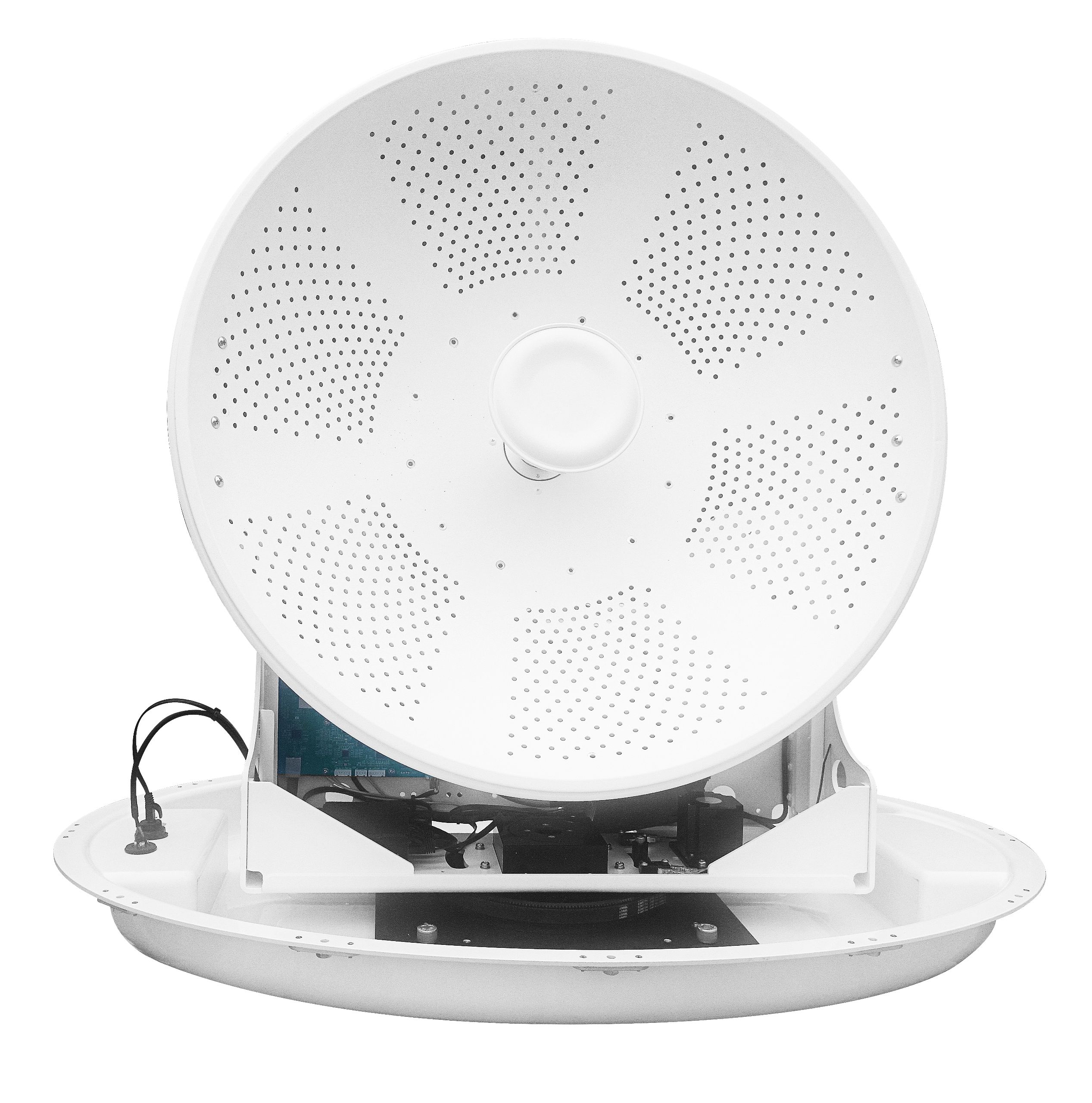

Long-range, high-bandwidth, low-latency communication between offshore facilities and shore is essential for offshore oil and gas platforms, marine ranches, and unmanned vessels. Yet tens or even hundreds of kilometers offshore, vessel motion caused by wind and waves can cause conventional fixed microwave antennas to lose alignment with the target, resulting in signal attenuation, packet loss, or link interruptions. KINGSAT microwave auto-tracking antennas automatically adjust their pointing direction as a vessel moves, helping maintain stable long-distance wireless links and supporting reliable offshore-to-shore data transmission over distances of around 100 km.

Challenge: Why Fixed Wireless Bridges Lose Connectivity in Rough Seas?
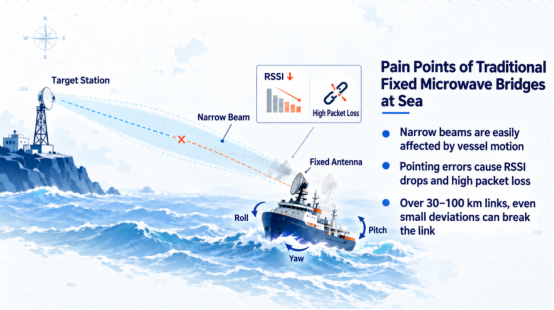
Conventional microwave wireless bridges, including fixed panel and parabolic antennas, are widely used for terrestrial point-to-point links because they are relatively simple and cost-effective. In rough offshore conditions, however, fixed antennas face several critical challenges.
- Narrow Beamwidth and Vessel Motion
Long-distance microwave links typically require high-gain antennas, which tend to have narrow beamwidths (for example, 3.5°–9°). Waves cause vessels and floating platforms to roll, pitch, and yaw continuously. Without dynamic motion compensation, even slight vessel movements can cause a fixed antenna to point away from the remote station and destabilize the link.
- Severe Signal Attenuation, Packet Loss, and Video Freezes
A pointing error of just a few degrees can cause the received signal strength indicator (RSSI) to drop sharply or cause the link to lose lock altogether. At the network level, this can mean high packet loss, sudden drops in throughput, pixelated or frozen surveillance footage, and even interrupted control commands.
- Small Pointing Errors Can Disrupt Long-Distance Links
The longer the transmission distance, the greater the displacement caused by a given angular pointing error at the far end. On 30–100 km offshore-to-shore links, continuous wave-induced motion can move the antenna beam away from the target station, causing severe signal attenuation or even a link outage. This makes conventional fixed wireless bridges poorly suited to the reliability demands of dynamic offshore environments.
Solution: KINGSAT Precision Microwave Auto-Tracking for Long-Range Links
To address antenna misalignment caused by rough seas, KINGSAT offers a microwave auto-tracking antenna system designed for maritime and other demanding environments.
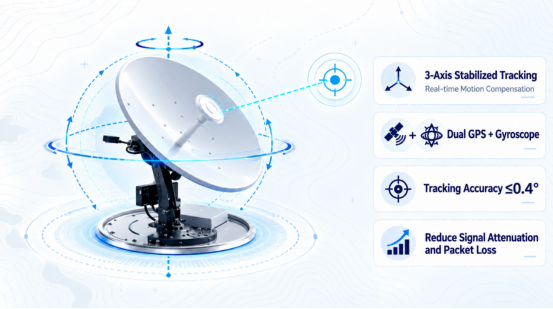
- Three-Axis Stabilization Compensates for Vessel Motion in Real Time
A three-axis stabilized servo system combines dual GPS receivers, gyroscopes, and dynamic tracking algorithms to compensate for vessel roll, pitch, and yaw in real time. With tracking accuracy within 0.4°, the system keeps the high-gain parabolic antenna pointed at the target station, reducing the risk of signal attenuation and packet loss caused by vessel movement.
- Position Synchronization and Automatic Alignment Over 100 km
The system integrates a narrowband VHF communication module to exchange GPS coordinates and position data in real time between offshore and shore stations. Using these shared coordinates, the antennas automatically calculate the required azimuth and elevation angles, enabling blind search, automatic alignment, and rapid link establishment over distances of up to 100 km while reducing the need for manual alignment.
- Multi-Band Support with Integrated Modems
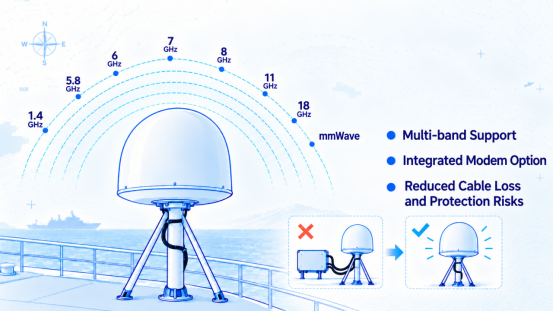
The system supports the widely used 5.8 GHz band and can be customized for 1.4, 6, 7, 8, 11, or 18 GHz, as well as millimeter-wave frequencies. Modems from suppliers such as Radwin, Cambium, and Ceragon can be integrated into the antenna enclosure, helping avoid RF cable losses and weatherproofing risks associated with externally mounted equipment.
- Multi-Scenario Microwave Antenna Portfolio
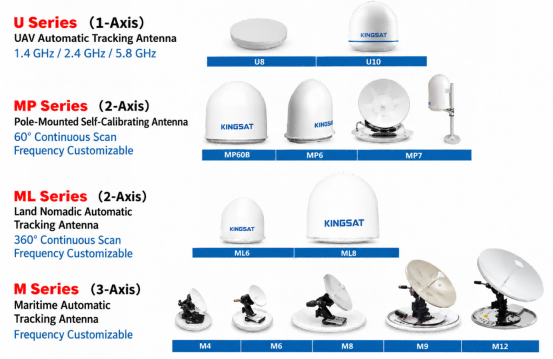
Advantages: Reliable, Fiber-Like Connectivity on the Move
Beyond compensating for vessel motion, KINGSAT microwave auto-tracking antennas offer several advantages in transmission performance and remote operations.
- High Bandwidth and Fiber-Like Low Latency
The system supports throughput of up to 1,500 Mbps. Field tests at 86 km and 113 km recorded 0% packet loss and millisecond-level latency.

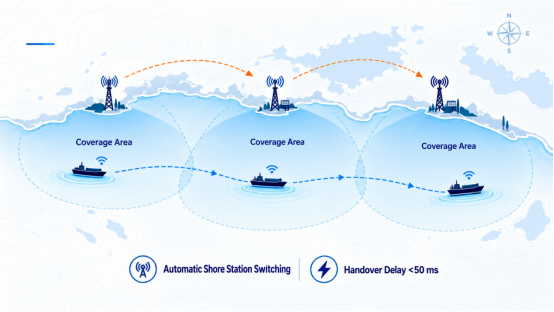
- Geofencing and Seamless Roaming
Coordinate-based geofencing and fast roaming, with handover latency below 50 ms, allow the system to switch automatically between shore stations as a vessel moves through different coverage areas, minimizing communication interruptions.
- Integration with Video Compression
Paired with a KINGSAT video compression box, the system can achieve video compression ratios exceeding 100:1. For example, 1080p video can be transmitted at 32–50 Kbps, substantially reducing the bandwidth required for video backhaul.
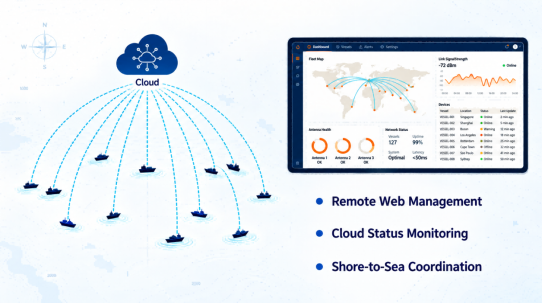
- Remote Web Management and Cloud Operations
A web-based management interface allows antenna status data to be uploaded automatically to the cloud, enabling real-time remote monitoring, maintenance, and troubleshooting for both offshore and shore-based equipment.
Applications: Long-Range Microwave Links Across Marine and Airborne Operations
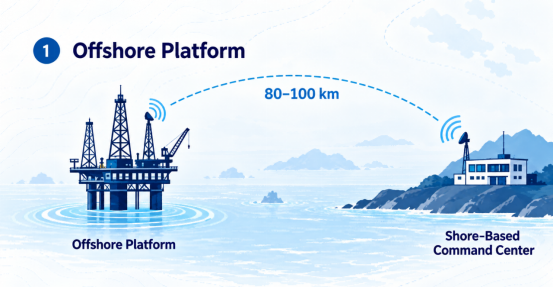
- Offshore Oil and Gas Platforms and FPSO
Carry production data, control commands, and multiple HD video streams between offshore facilities 80–100 km from shore and land-based control centers.
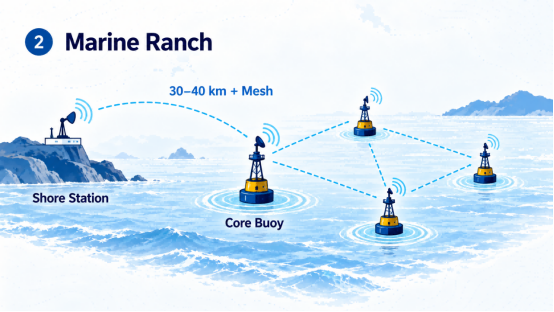
- Marine Aquaculture and Offshore Buoy Mesh Networks
Combine 30–40 km microwave links between shore stations and central buoys with dynamic mesh networking between buoys to build wide-area maritime safety monitoring networks.
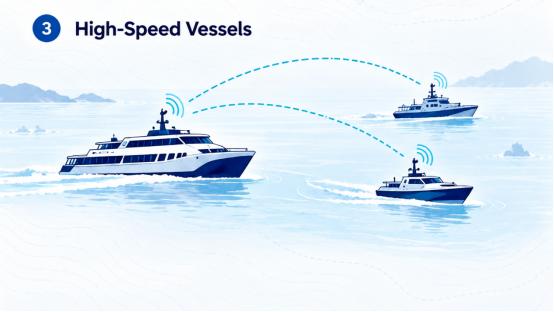
- High-Speed Ferries, Tugboats, and Patrol Vessels
Maintain HD video backhaul and network connectivity while vessels travel at speed or experience substantial motion.
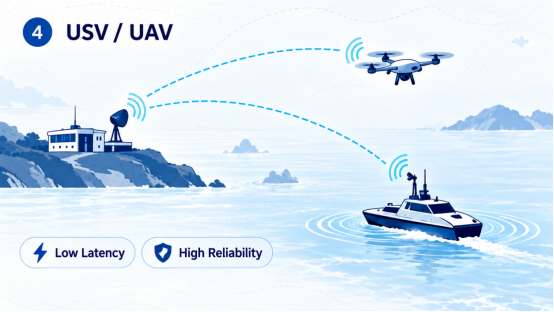
- Uncrewed Surface Vessels (USV) and Unmanned Aerial Vehicles (UAV)
Provide long-range, low-latency, reliable wireless data backhaul for unmanned maritime and airborne platforms.
Conclusion
The central challenge in extending offshore communications to around 100 km is maintaining antenna alignment despite heavy vessel motion. Conventional fixed wireless bridges lack the dynamic compensation needed for highly reliable links. By combining a three-axis stabilized servo platform with high-gain microwave technology, KINGSAT microwave auto-tracking antennas address the packet loss and link interruptions associated with rough seas, supporting more stable high-capacity wireless transmission offshore.
Contact us: sales@kingsat-tech.com Official website: www.kingsat-tech.com
Youtube: http://www.youtube.com/@kingsatmaritimeantennas4640