
In ocean-going shipping, proper crew conduct and effective watchkeeping are directly tied to navigational and asset safety. Yet vessels operate far from shore for long periods in an isolated marine environment, making it difficult for shore teams to identify unsafe behavior as it occurs. Examples include working on deck without a safety helmet, entering restricted areas, falling asleep on watch on the bridge or in the engine room, and leaving a duty station without authorization. Such behavior can create serious maritime safety risks and lead to substantial losses for shipping companies.
Challenge: CCTV Is in Place, but Real-Time Shore Monitoring Remains Costly
Traditional monitoring: post-event review makes timely intervention difficult
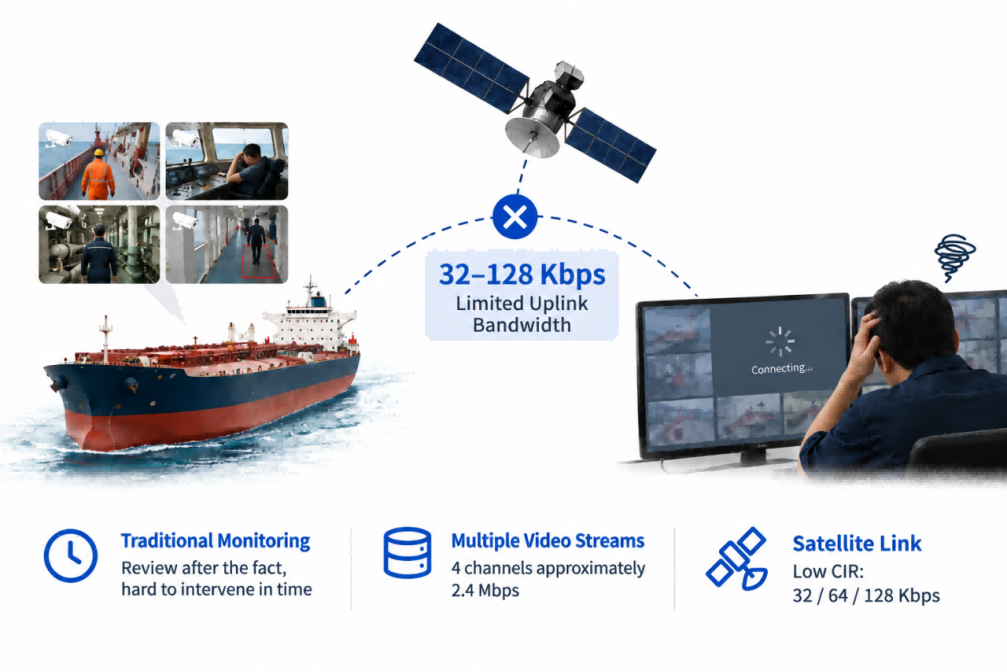
For years, shore-based supervision of ocean-going vessels has relied mainly on periodic reports from the master or on reviewing footage stored on the vessel’s NVR after an event. This non-real-time approach is inherently delayed: it cannot provide an immediate warning or enable intervention when unsafe behavior occurs, and it offers limited deterrence.
Video backhaul: multiple camera feeds require substantial bandwidth
As vessels become increasingly digitalized, most ocean-going ships are now equipped with CCTV systems. The challenge is transmitting these video feeds back to a shore-based operations center in real time. With conventional video transmission, a single 540P–720P stream typically requires about 600–800 Kbps of bandwidth. Transmitting four streams simultaneously would require about 2.4 Mbps of uplink bandwidth, even at 600 Kbps per channel.
Satellite links: limited bandwidth and high communication costs
During ocean voyages, vessels typically rely on VSAT or other maritime satellite broadband services. On links where bandwidth is limited and communication costs are high, continuously transmitting multiple HD video streams can quickly consume valuable uplink capacity. Under low-CIR conditions such as 32 Kbps, 64 Kbps, or 128 Kbps, conventional video transmission is even less practical for real-time monitoring, making round-the-clock shore-based video monitoring difficult and costly to implement.
Solution: KINGSAT Video Compression and AI Detection System
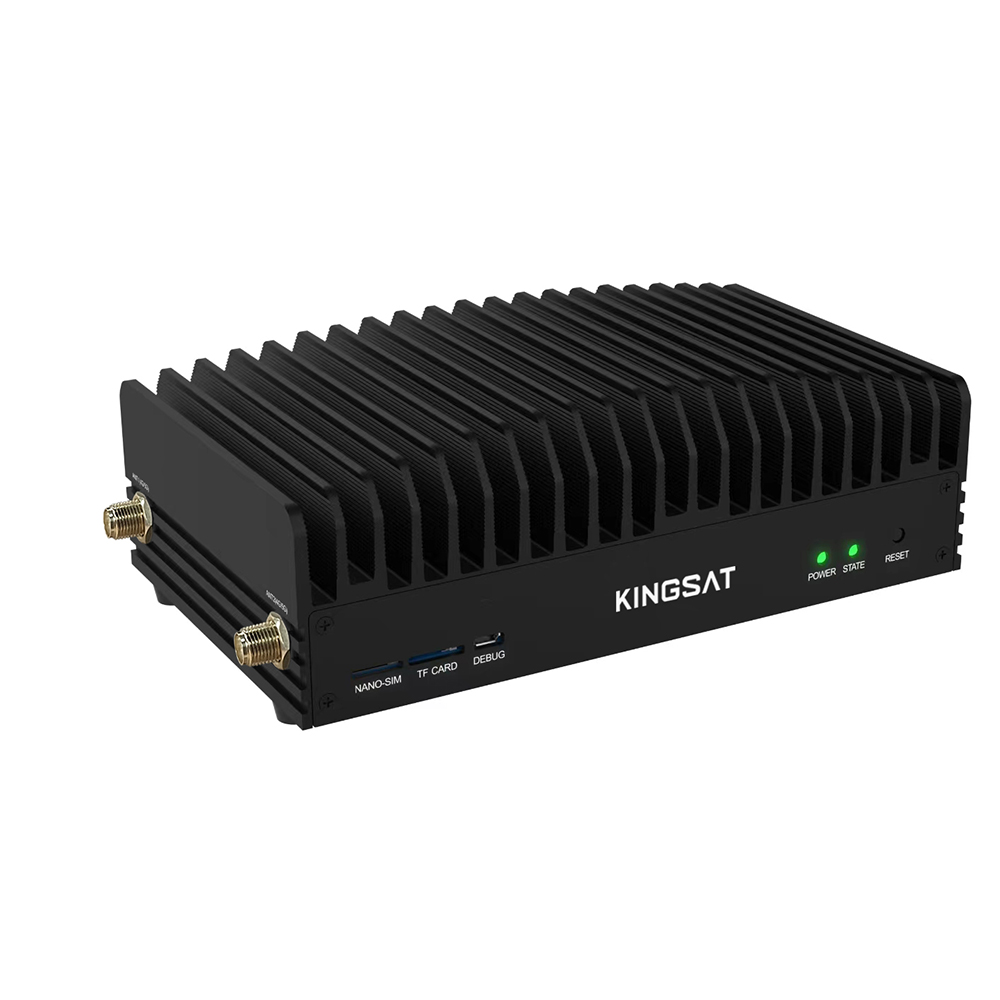
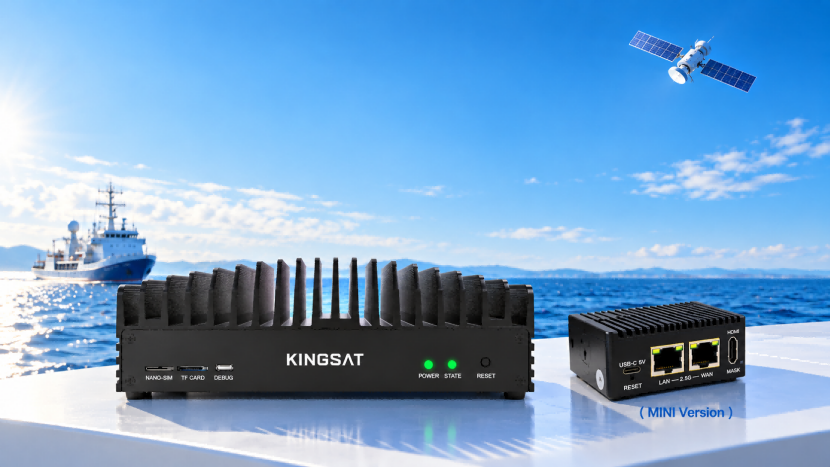
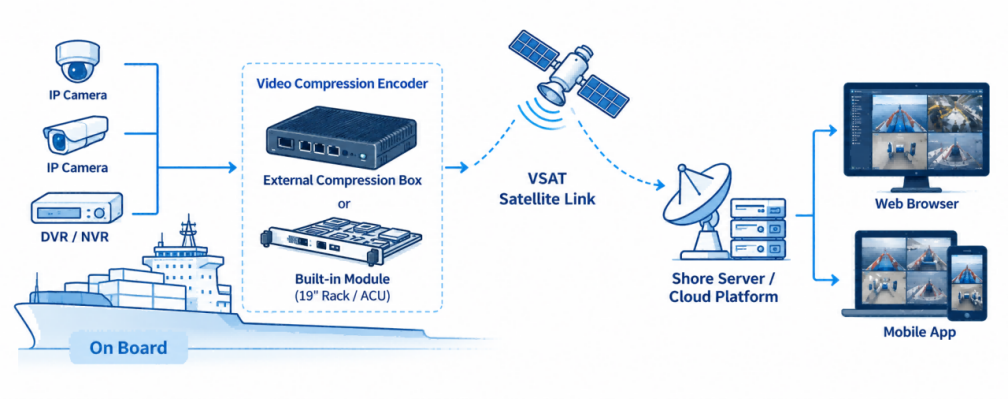
To overcome the bandwidth and cost constraints of real-time maritime video transmission, KINGSAT provides a video compression and AI-based detection solution designed for marine environments. By combining onboard video compression hardware with a shore-based or cloud-based decoder server, the system enables real-time HD video transmission and intelligent detection of unsafe behavior even over ultra-narrowband satellite links.
Edge AI detection of unsafe behavior: On board the vessel, KINGSAT video compression hardware provides powerful edge computing capabilities, enabling multiple 1080P video streams to be efficiently compressed while running multi-channel AI analytics simultaneously. The system can automatically detect unsafe behaviors such as failure to wear a safety helmet, entry into restricted areas, abnormal personnel behavior, and unauthorized absence from duty stations. Once an event is detected, the system immediately triggers a local alarm and uploads key frames for review.

100:1+ compression for low-bandwidth transmission: Designed for satellite links, the system features two compression strategies—Intelligent Sense and Quality Balance—allowing the compression level to be adjusted based on actual network conditions. Under specific test conditions, the video compression ratio can exceed 100:1. Test results show that a single 720P video stream at 8 FPS can be transmitted clearly and smoothly over an uplink with just 32 Kbps CIR.

Broad Compatibility and Cloud-Based Visual Management: The onboard hardware is available as either an external compression box or a built-in module for a 19-inch rack or ACU. It can connect to existing IP cameras and DVR/NVR systems on board, supporting RTSP, GB28181, ONVIF, and proprietary protocols from major manufacturers. The compressed video streams are transmitted over the satellite link to a shore-based server or cloud management platform, allowing shore-based personnel to view live video feeds from across the vessel via a web browser or mobile device.
Value: Lower Safety Management Costs and Earlier Risk Intervention
With the KINGSAT video compression and AI monitoring solution, vessels can significantly reduce the additional bandwidth required for real-time video transmission, even over satellite links with limited capacity:
1. Significantly lower satellite data costs for routine real-time monitoring:
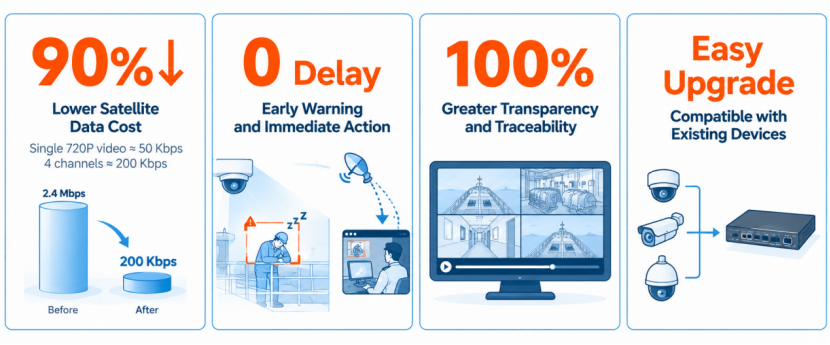
A single 720P video stream can be compressed to about 50 Kbps, while four streams require about 200 Kbps in total, allowing a 256 Kbps CIR link to support transmission. Compared with conventional video transmission, this reduces satellite bandwidth usage by more than 90%, making routine real-time shore monitoring far more practical.
2. Shift from post-event response to early warning and immediate intervention:
With real-time onboard AI detection, unsafe behavior such as failing to wear a safety helmet or sleeping on watch can be identified immediately. Alerts and low-bitrate HD video can be sent simultaneously to the shore-based safety management platform, allowing shore personnel to contact the master promptly via satellite phone or voice communication and address the risk before it develops into an incident.
3. Greater operational transparency and traceability:
Real-time video transmission and access to recorded footage give shore-based teams a clearer view of onboard operations and provide video evidence for incident review, safety management, and internal accountability.
4. Compatibility with existing equipment and lower deployment costs:
The highly integrated hardware and broad compatibility with different camera systems allow vessels to add intelligent monitoring without replacing existing CCTV cabling or cameras, reducing upgrade complexity and hardware costs.
Conclusion: A New Approach to Safety Management for Ocean-Going Shipping
Safety comes first on ocean voyages. With KINGSAT video compression and AI detection, real-time shore-based supervision no longer has to be constrained by high satellite data costs and limited communication bandwidth. Built around high compression ratios, ultra-low bandwidth usage, and edge AI algorithms, the solution addresses the last-mile challenge of transmitting onboard CCTV video back to shore.
The result is a shift from simply having cameras on board to giving shore teams the ability to see what is happening, detect potential safety issues, and maintain video records for traceability, making long-term remote video monitoring practical even when satellite bandwidth is limited.

Contact us: sales@kingsat-tech.com Official website: www.kingsat-tech.com
Youtube: http://www.youtube.com/@kingsatmaritimeantennas4640