

With the rapid growth of smart ocean initiatives and high-end coastal tourism, the demand for high-speed maritime broadband aboard high-speed passenger ships, Roll-on/Roll-off (Ro-Ro) vessels, and tourist ferries is surging. Traditional satellite communications (VSAT) or public cellular networks (4G/5G) often struggle to handle high-density concurrent tourist internet access and real-time multi-channel HD video transmission simultaneously.

As a specialized maritime communication equipment manufacturer, KINGSAT introduces its premium Shore- to-Ship Point-to-MultiPoint (PtMP) Microwave Broadband Solution. By pairing onshore base stations with stabilized 3-axis maritime automatic tracking antennas, this solution is engineered for complex marine Line-of- Sight (LoS) and Near-Line-of-Sight (NLoS) environments, establishing a robust, high-speed, and resilient"mobile fiber-optic" network across turbulent waters.

1. Core Advantages of KINGSAT 3-Axis Automatic Tracking Antennas
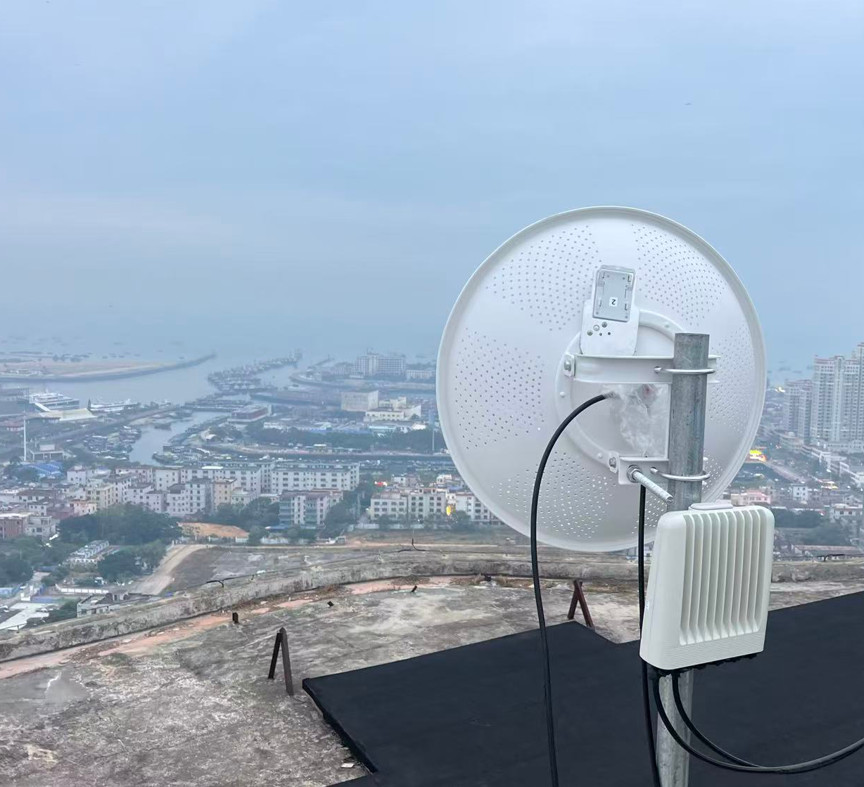
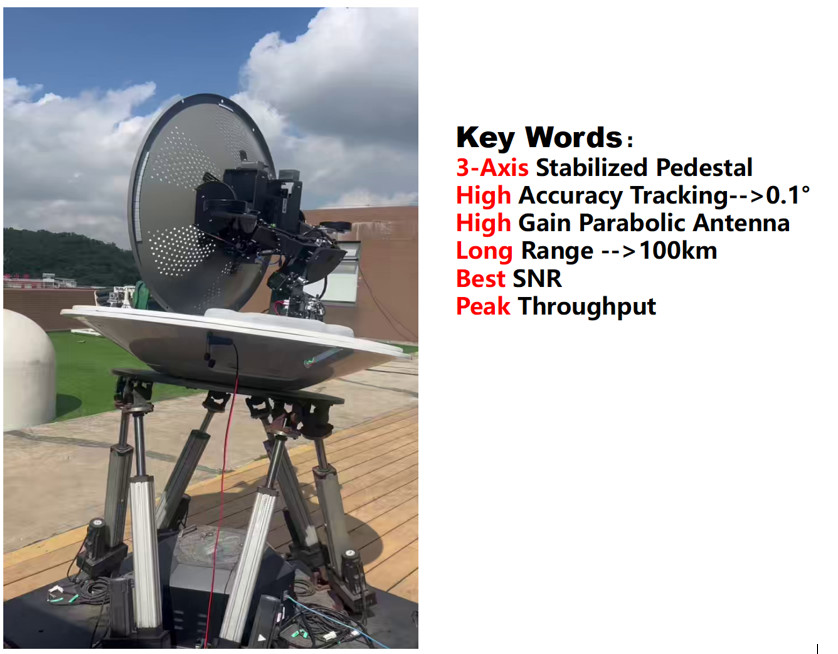
Under rough sea conditions, ship movements—specifically roll, pitch, and yaw—can easily disrupt directional microwave links. KINGSAT's vessel-mounted automatic tracking antennas serve as the foundation of link stability, powered by an advanced hardware servo system:
- 0.1° High-Precision Dynamic Stabilization & Tracking: Equipped with built-in high-precision Inertial Navigation Systems (INS) and robust servo-drive algorithms, the antenna supports 360° continuousazimuth (AZ) and wide-range elevation (EL) scanning. Its extreme tracking accuracy of up to 0.1°effectively isolates hull motion caused by heavy winds and waves, maintaining precise signal alignment under all sea states.
- High Gain & Extreme Environmental Adaptability: Utilizing onboard terminals such as the KINGSAT M6 integrated with high-performance modems, the system provides antenna gains of up to 30dBi with ±45°dual-polarization. This ensures high-quality communications even in complex electromagnetic environments or edge-coverage zones.
2. Overcoming Bandwidth Bottlenecks: Up to 200+ Mbps per Vessel
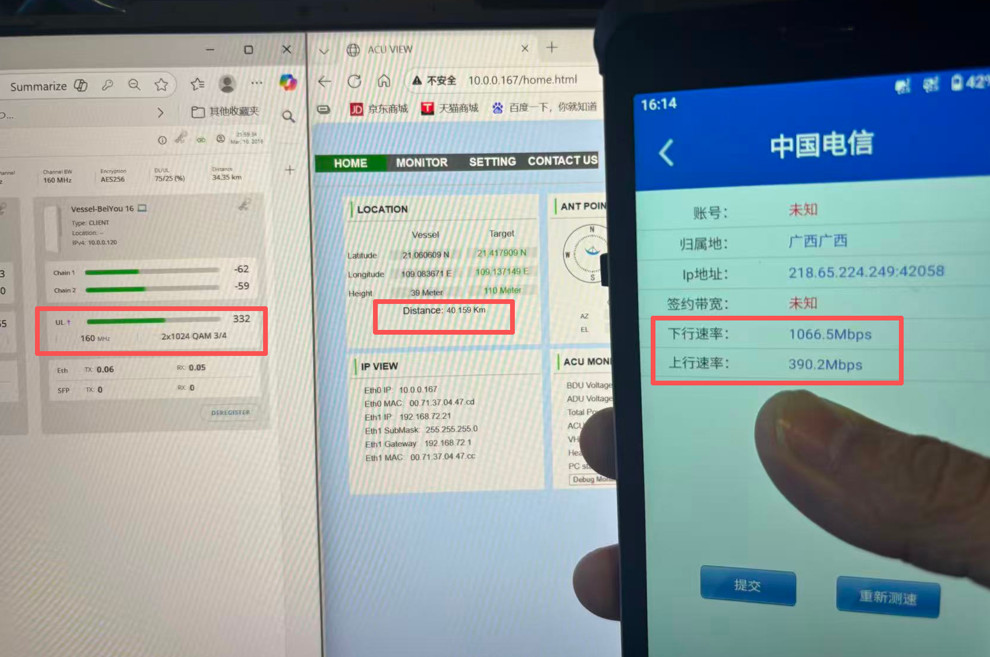
By leveraging carrier-grade high-capacity microwave backhaul technology, a single onshore base station can achieve an aggregate network throughput of up to 1500 Mbps. Under a Point-to-MultiPoint (PtMP) network architecture, the system stably delivers at least 200 Mbps of dedicated high-speed access bandwidth to each ferry.
This massive capacity easily satisfies high-density Wi-Fi demands for hundreds of onboard passengers, simultaneous multi-channel CCTV surveillance backhaul, and real-time bi-directional HD video streaming for maritime information systems—eliminating network latency and bandwidth shortages.
3. Highly Resilient PtMP Architecture: Seamless Scalability & Roaming
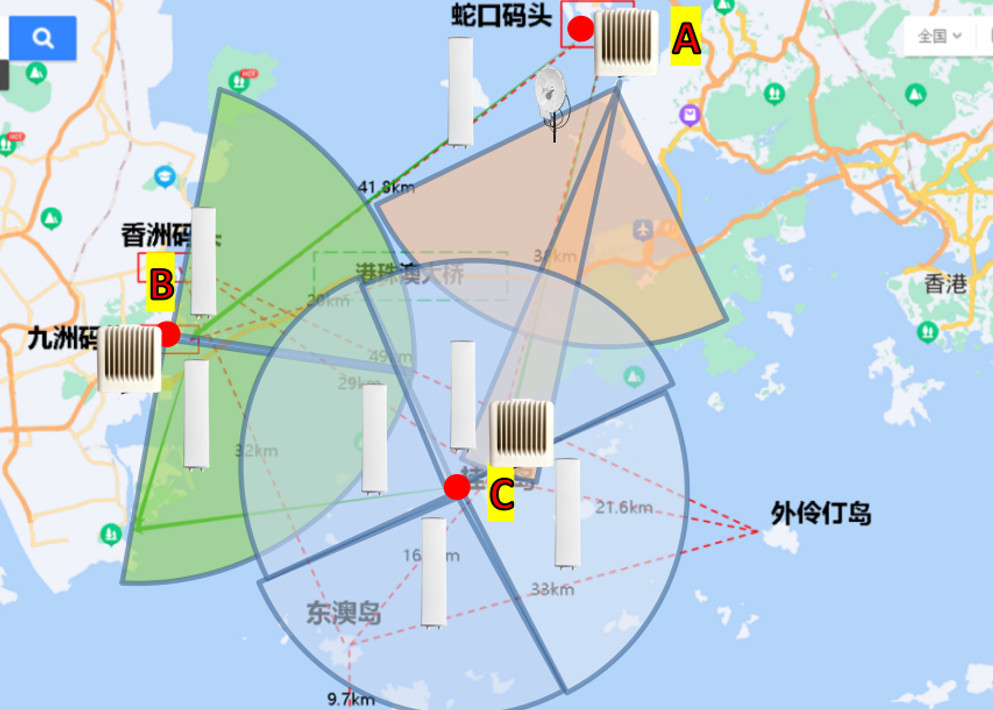
Using a star-topology PtMP configuration, this architecture significantly reduces capital and operational expenditures (CAPEX/OPEX) for service providers and ship owners:
- One-Time Investment, Seamless Expansion: The onshore infrastructure only requires deploying sector base stations (e.g., using 90° sector flat-panel antennas) at high coastal elevations, such as telecommunication towers, mountain peaks, or island stations. To add more vessels in the future, operators do not need to modify onshore base stations; they simply install a KINGSAT dynamic marine tracking antenna on each new vessel for instant network integration.
- Intelligent, Seamless Roaming & Handovers: The onboard antenna system integrates smart positioning and geofencing technologies. As vessels navigate between different base station sectors, the system automatically detects heading, latitude, and longitude to seamlessly switch to the optimal shore station. Handover downtime is under 30 seconds with a network latency of less than 80ms, ensuring zero disruption to critical maritime operations.
4. Remote Monitoring & Simp‘’lified Operations
The entire network—comprising shore base stations and ship-mounted tracking antennas—is managed via a unified, intelligent Network Management System (NMS). Operators can monitor antenna tracking status, Received Signal Strength Indicators (RSSI), Signal-to-Noise Ratios (SNR), and real-time throughput from an onshore command center. Remote configuration and remote diagnostics greatly reduce the costly need to send technicians offshore for troubleshooting.
Typical Application Scenarios
- Broadband network coverage for coastal and inter-island passenger ferries and luxury cruise vessels.
- High-capacity data transmission for offshore support fleets (e.g., pipe-laying ships, cable layers, research vessels).
- High-speed point-to-point connections and emergency communications between shore and offshore oil/ gas platforms or marine farms.

_________________________________________________________________
KINGSAT is redefining the boundaries of mobile access. By employing automatic microwave tracking technology as a "mobile fiber link," maritime operators can bypass the constraints of subsea cabling, deploying high-performance network backhaul links instantly across any mobile scenario.