
People who sail ocean-going routes, especially the people who manage oil tankers and bulk carriers, have surely encountered this frustrating situation: the ship is sailing smoothly at sea, the crew is gathered in the canteen watching a sports game or the news, but the bow slightly veers course, or the ship happens to pass near the equator. The TV screen suddenly freezes, with only a circle spinning or simply showing "no signal."
This is what we often call a "signal blackout" in the industry. Today, I'll give you a thorough breakdown: Why do big ships always get disconnected? How did KINGSAT completely solve this problem with the "dual-antenna switching" trick?
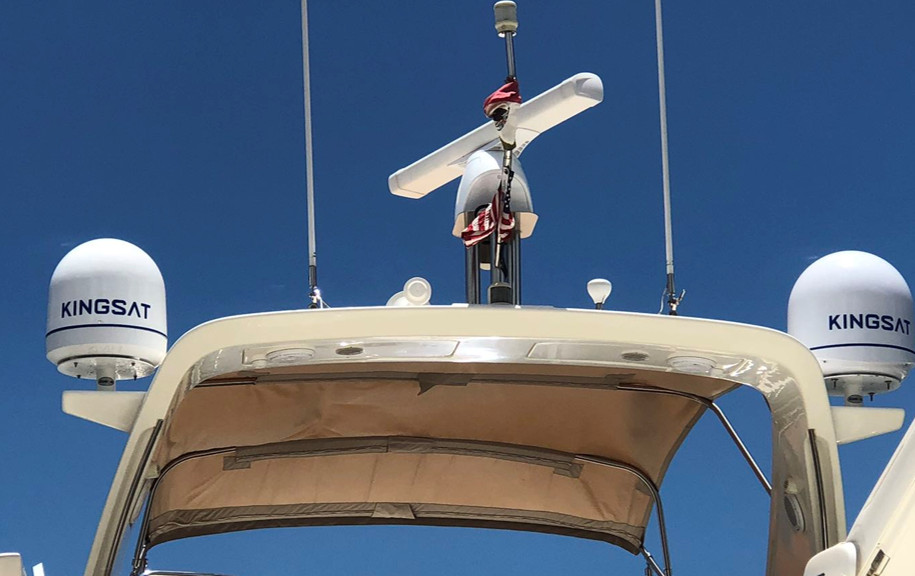
1. The Challenge: Why are massive oil tankers natural "signal killers"?
Let's be clear from the start: the signal dropouts aren't due to weak antennas, it's just the ships are simply so long that they get in the way.
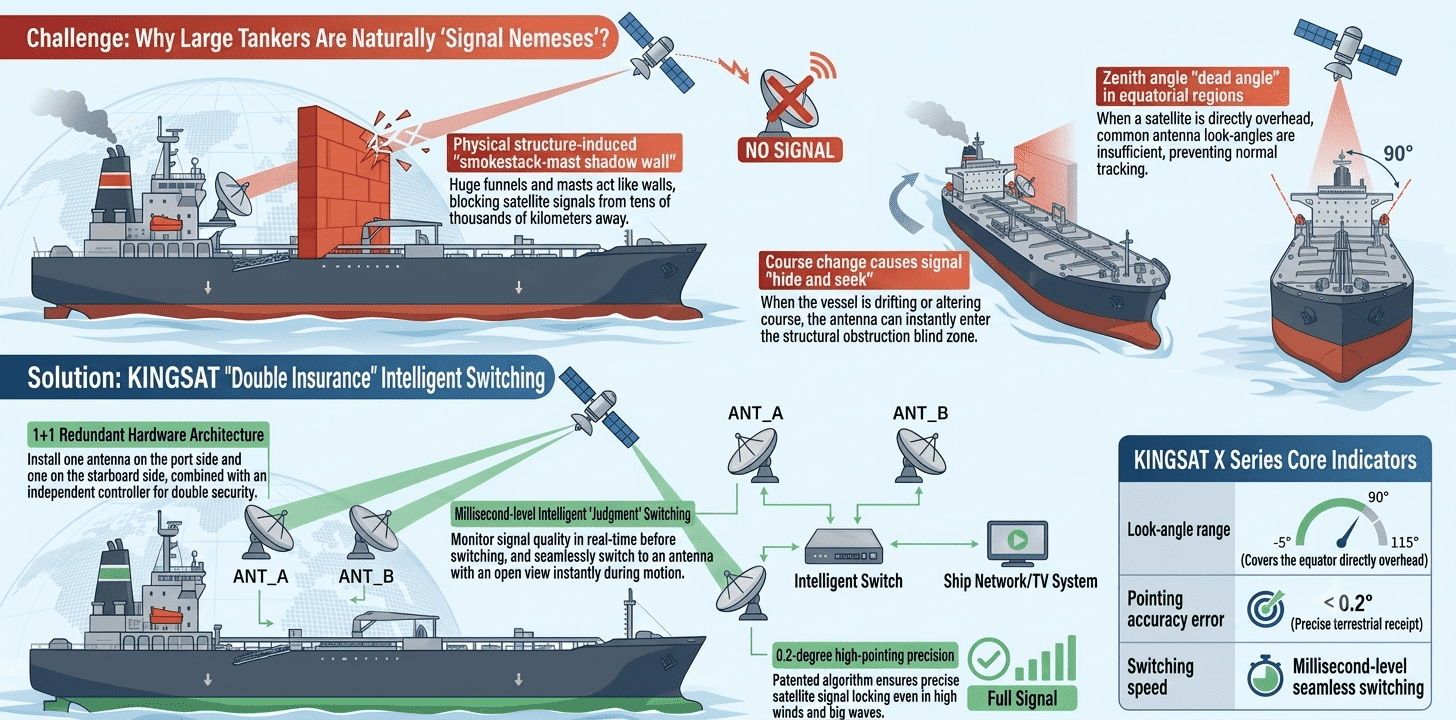
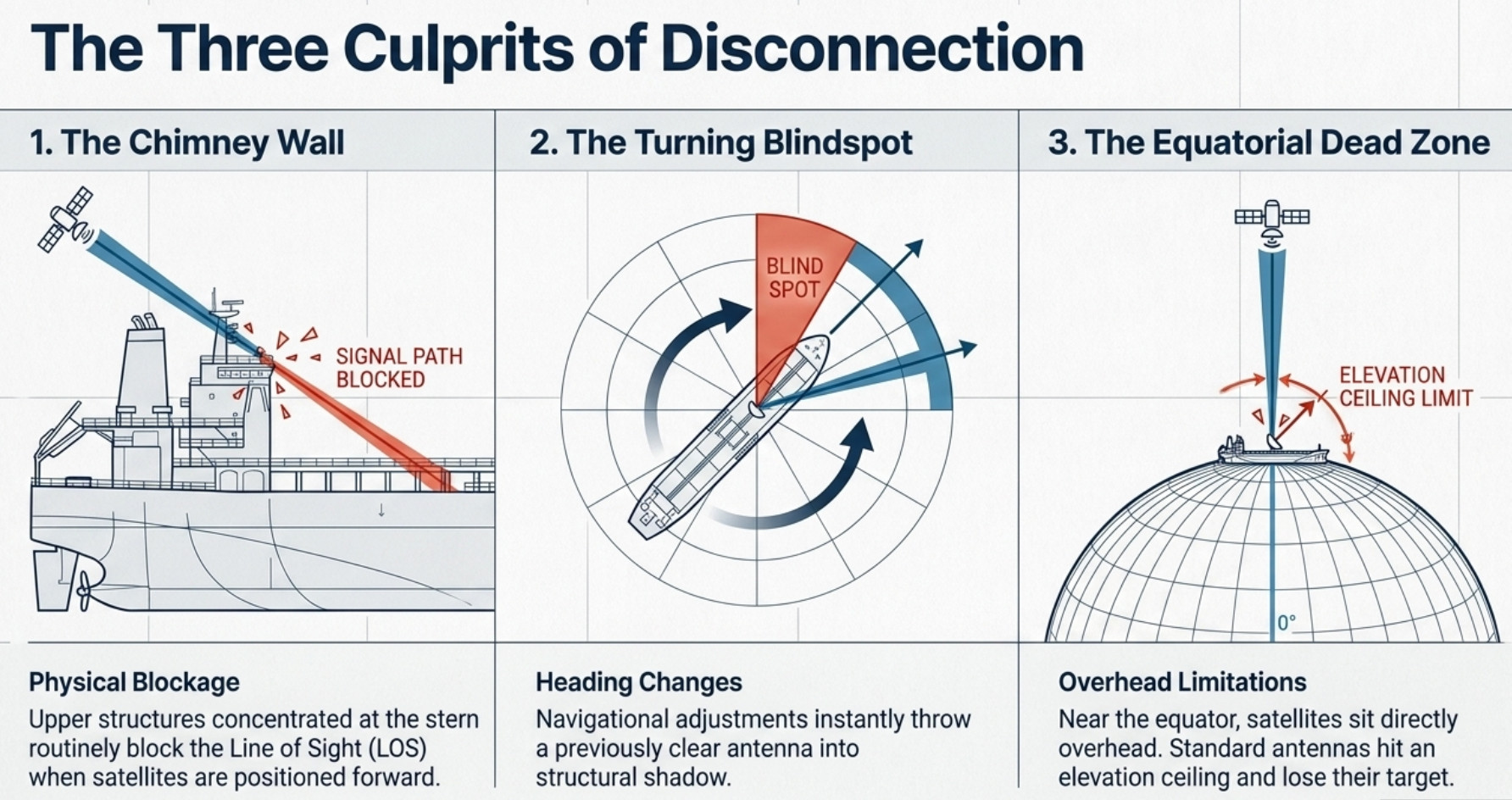
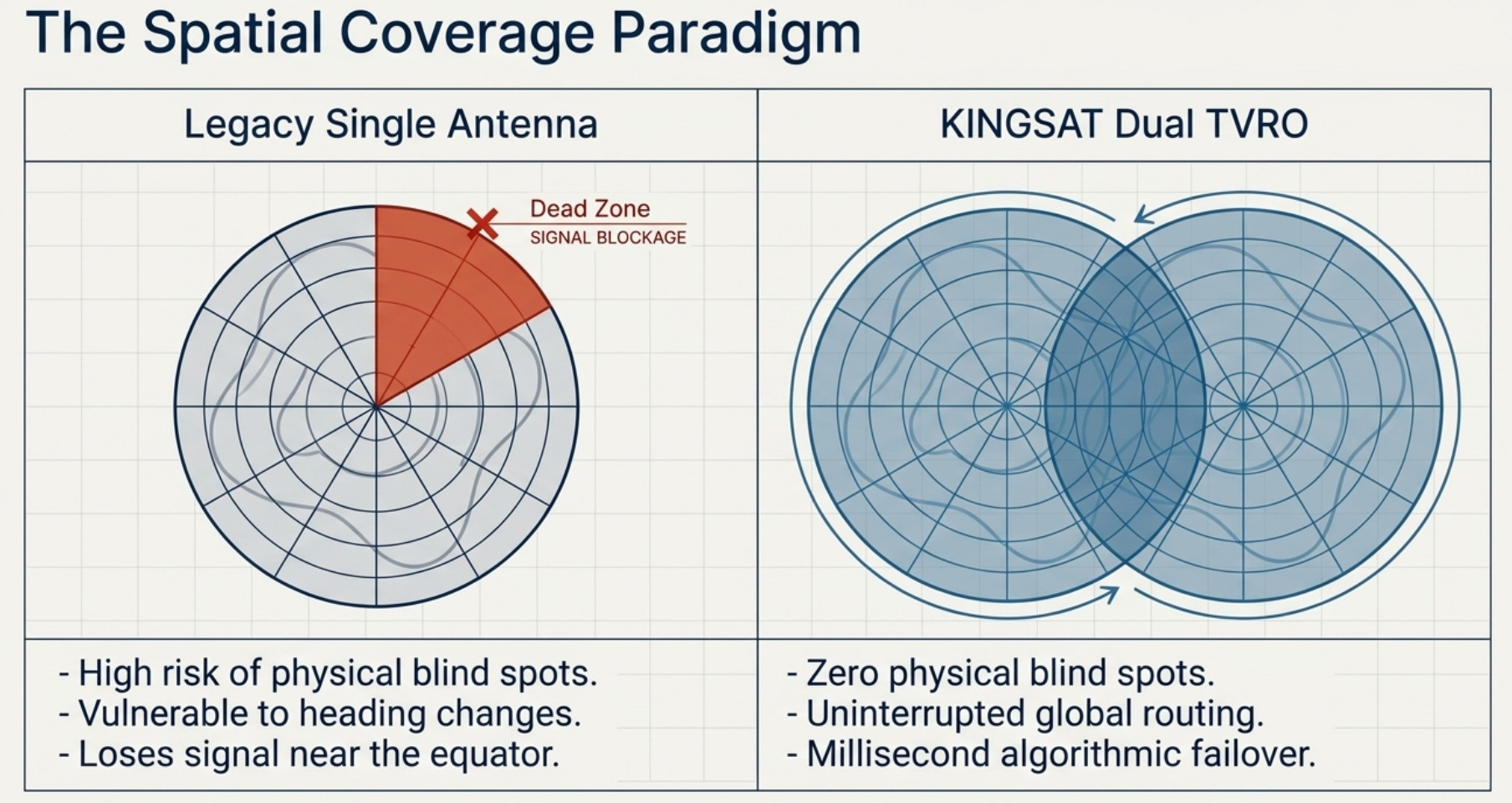
- "Chimney Shadow Wall": Nowadays, oil tankers and bulk carriers are often two or three hundred meters long. The massive exhaust chimneys, towering masts, and cranes in the middle or rear of the hull are like moving walls. When satellites are tens of thousands of kilometers high, when the antenna rotates to an angle and these iron blocks block the way, the signal is completely lost.
- "Heading to hide and seek": Ships at sea do not travel in a straight line; sheltering from the wind, turning around, and turning are the norm. As soon as the boat turns, the previously unobstructed antenna can instantly enter the blind spot.
- "Equatorial awkwardness": Many crew members report that when ships sail to Indonesia or Africa, where the TV is the worst to watch near the equator. Why? Because the satellite is right above your head. If a regular antenna can't get up at the elevation angle, or if it gets stuck in the "dead spot" of the antenna's rotation, the signal will naturally be lost.
This frequent downtime not only makes the crew members' welfare experience terrible, but we management staff also have to deal with complaints and work hard to deal with.
2. Solution: How does KINGSAT's "double insurance" work?
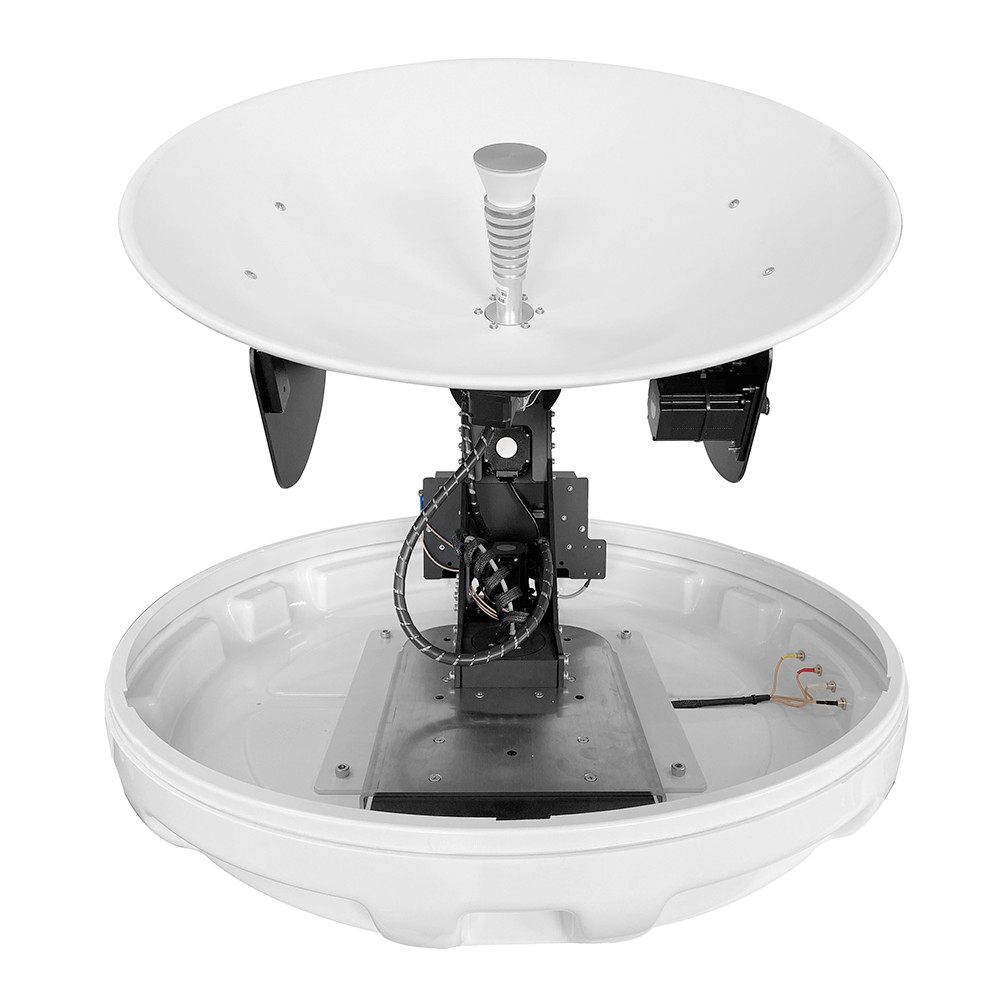
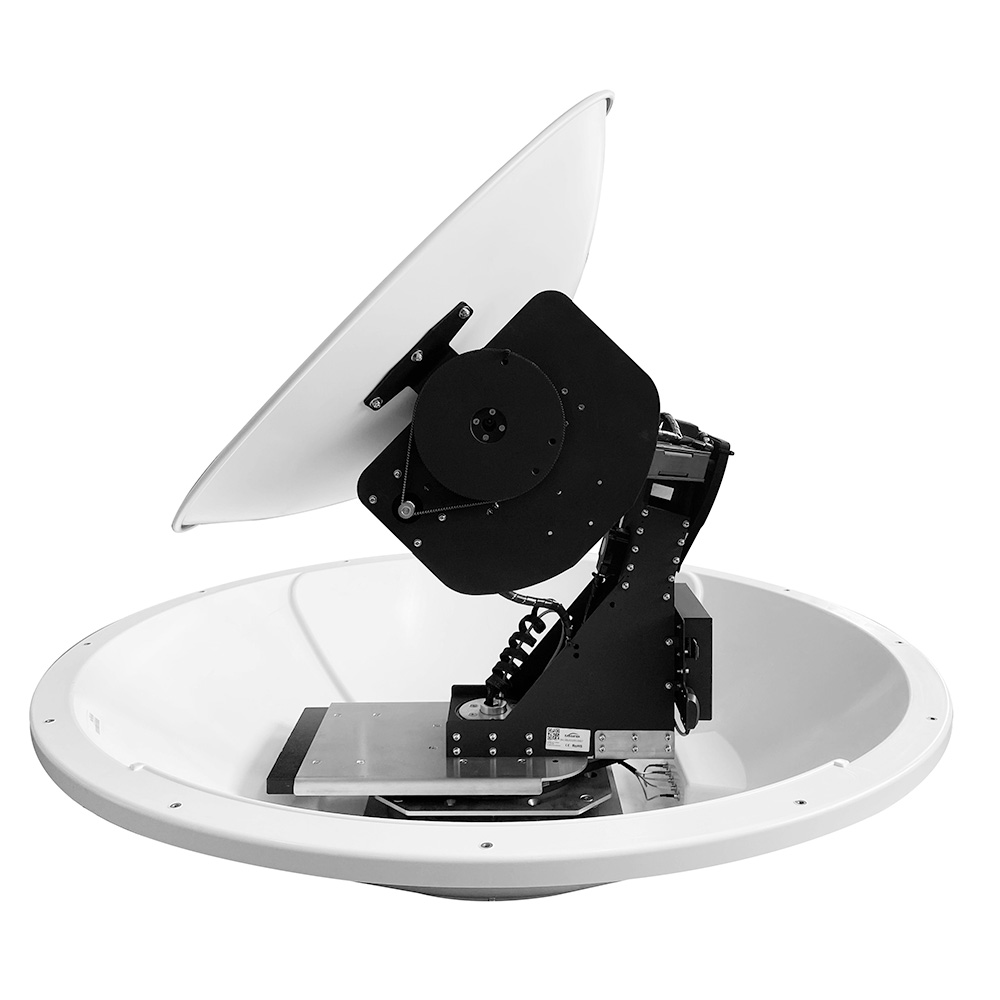
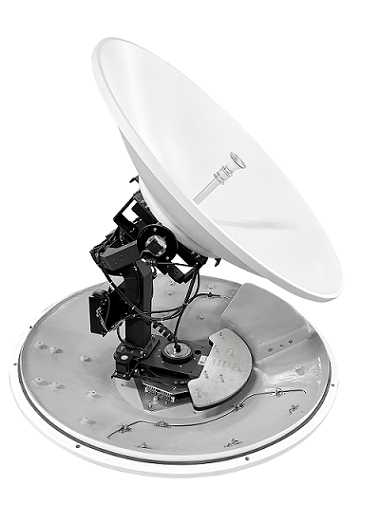
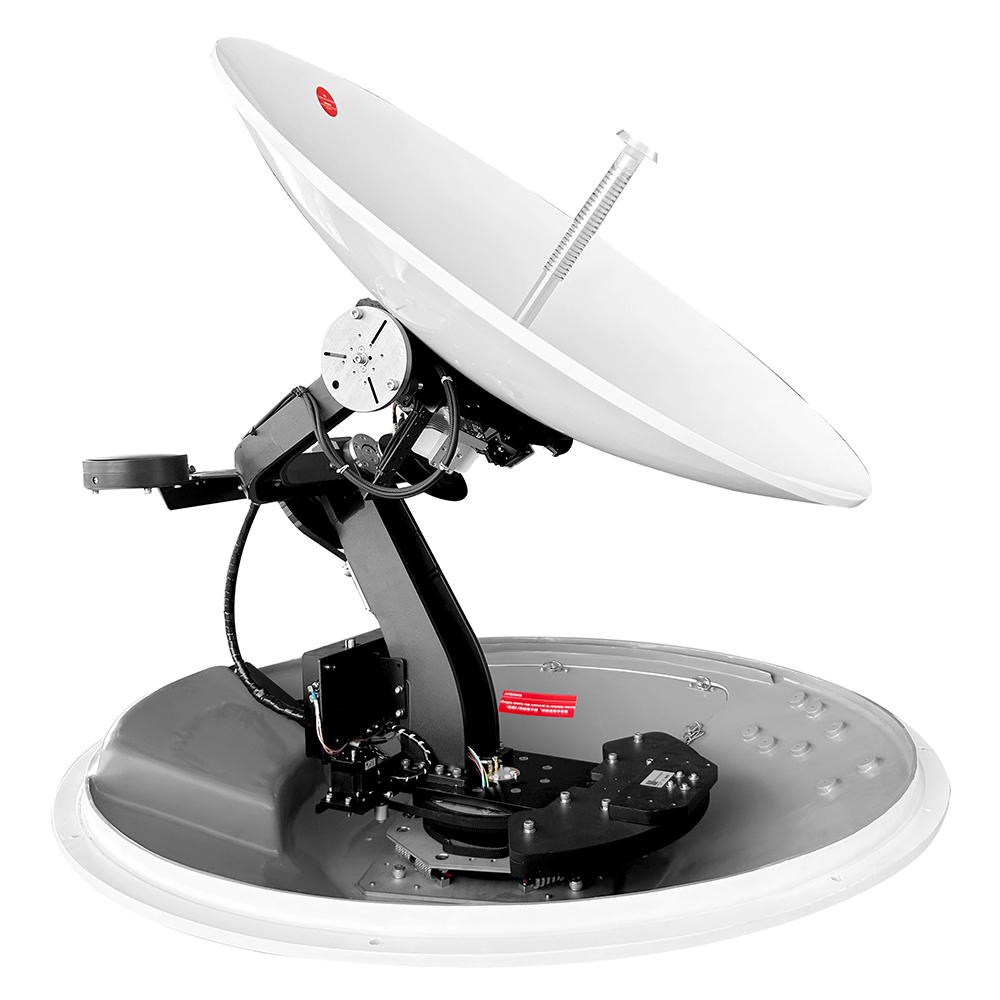
Since a single antenna has dead corners, let's give it a "twin." KINGSAT has deployed a very mature Dual TVRO automatic switching solution.
The core logic of this system is actually quite simple, just like our relay race:
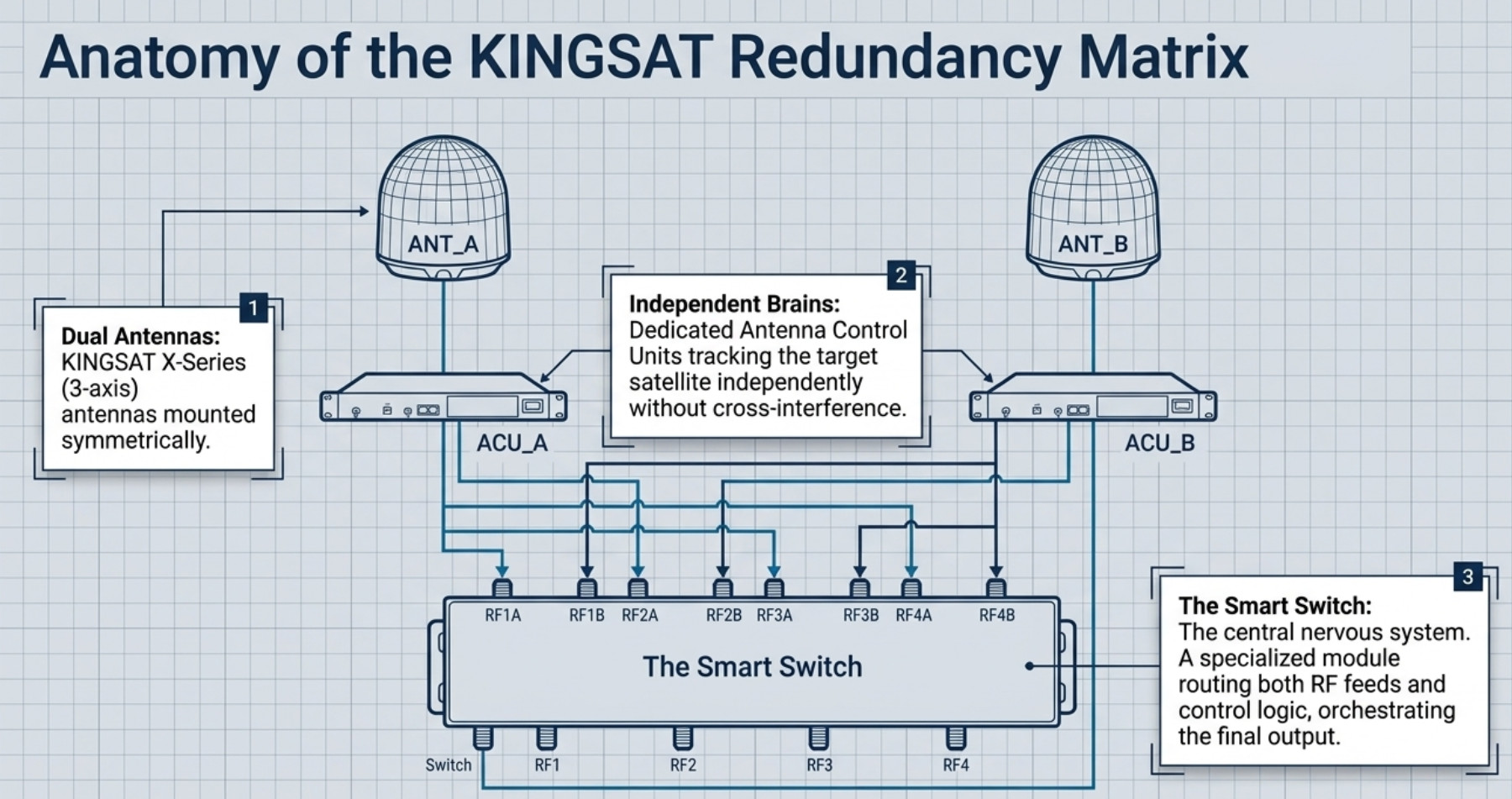
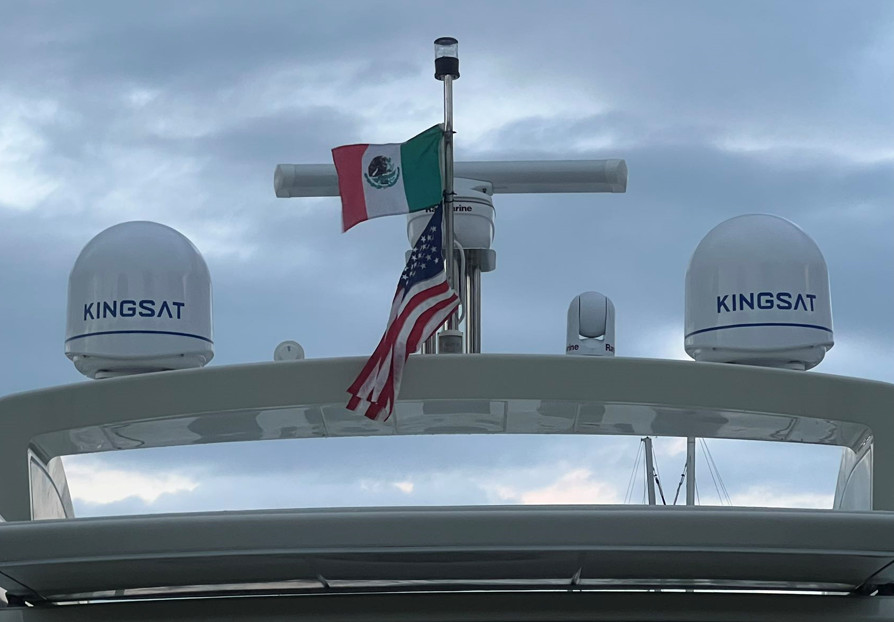
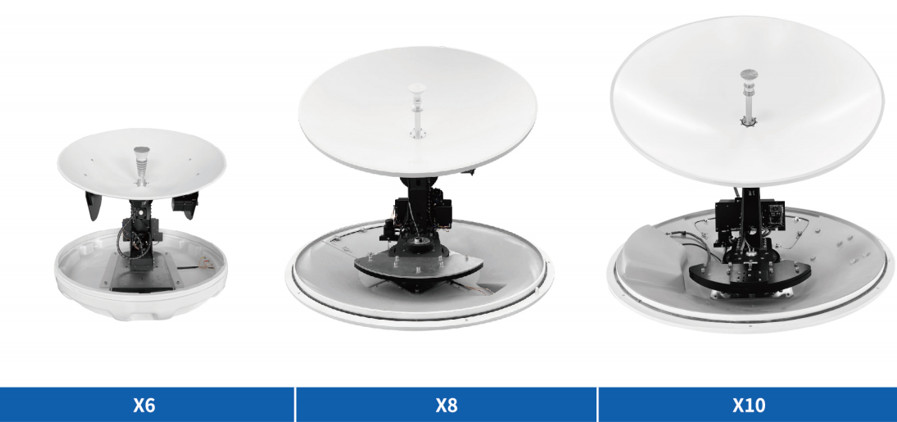
- Left-right arc (redundant hardware): We install one antenna each on the port side and starboard side (or one front and one aft of the ship) (we call them ANT_A and ANT_B). These two antennas can be the cost-effective KINGSAT X6 or the global KINGSAT X8 and X10.
-
Each antenna is equipped with its own controller (ACU): each monitoring its own satellite without interfering with each other.
-
Intelligent "Referee" (control switch switch): This is the most critical cutting-edge technology. Data from both antennas is ultimately aggregated into a special "toggle switch." This switch acts like a strict referee, keeping an eye on the signal strength (AGC/SNR) and lock status of both antennas every second.
How does it switch? When the ship turns, the main antenna (such as antenna A) is blocked by the chimney, and the signal begins to attenuate. At the very moment the signal is not completely lost, the smart switch can sense it and within milliseconds, directly switch the signal link to the other side of the antenna B, which has a wide field of view. How fast is this process? To put it simply, you can't even notice the switching with the naked eye while watching TV, and the picture doesn't even shake at all.
3. Benefits: Why does choosing KINGSAT guarantee a peaceful night's sleep?
-
360-degree all-around "no blind spots": With the "1+1" configuration, no matter how big your chimney is or how your ship turns, there's always an antenna that can see the satellite. This completely solves the problem of physical obstruction, enabling seamless signal connectivity across global routes.
-
No worries in equatorial regions: If you travel globally, I strongly recommend pairing it with our X8 or X10 series three-axis antennas. Its elevation range is from -5° to 115°. Other antennas would be "blinded" by satellites overhead, but our X series can track directly over the top of the antenna, and with automatic polarization adjustment (Skew), it can see steadily even at the equator.
-
Extremely high pointing accuracy: KINGSAT has 20 years of RF experience, and our patented algorithm ensures that antennas maintain pointing accuracy errors of less than 0.2 degrees during rough sea conditions and severe waves. This stability is no different from watching cable TV at home on land.
-
Remote management: If you choose the advanced ACU, managers can view antenna status directly from the site via the web. If the line has a minor issue, you don't have to send someone onboard; remote login can debug it, saving a lot of maintenance costs.
To sum up:
For large tankers, a single antenna is like a "one-eyed dragon"—sometimes misjudged; KINGSAT's dual-antenna switching solution equips the boat with a "clairvoyant" lens, alternating between two eyes so the connection never drops. If you're struggling with onboard signal issues, or if your new ship needs a reliable communication and entertainment solution for launching, just come to us!
Contact us: sales@kingsat-tech.com Official website: www.kingsat-tech.com
Youtube: http://www.youtube.com/@kingsatmaritimeantennas4640